
 Siddharth
The Mucky Middle of Video Content
YouTube's AI features let viewers skip to the answer. I wonder whether a specific type of content is about to get squeezed, and most creators are still making it.
I’m currently building tools at bob.studio. Check out our first tool, benchmark.social, a social research engine for high performing content teams.
I post videos and hot takes about marketing, tech, and sports. My background is in psychology and data science.
Siddharth YouTube's AI features let viewers skip to the answer. I wonder whether a specific type of content is about to get squeezed, and most creators are still making it.
Siddharth We all have to unapologetically embrace being a wrapper. Everything in life is a wrapper. Grok → Composer (Cursor) → Kimi → Claude The world is just a bunch of wrappers. Your coffee at Starbucks is just wrapping some other coffee that’s come from Brazil or India or Indonesia or wherever. Cursor trained this model called Composer. It’s a good model for coding, quite fast, can do a lot of really simple tasks and not overthink as much as these other massive models which can build you, like, whole applications in one shot. And what people don’t realize is that model was trained on this open source model from Moonshot, which is a Chinese company, called Kimi. It’s a really good open source model, one of the best out there. Anthropic released a report. What they say is that they basically took data from Claude users. They mimicked themselves as Claude users, and they took their data and performed reinforcement learning and a bunch of different fine-tuning of their model based on that data. And then Kimi was trained on Claude. So they’re all just wrappers.
 Siddharth
ai companies are nanawashing
#marketing #ai #chatgpt
 Siddharth
I just used Claude to write out 30 days of content based on proven videos that have already gone viral.
I’m doing this to revive my tennis account (27k YouTube, 4k IG, 6k TikTok). It’s been dead for a few years. The goal is to use this playbook to get it to 100k and beyond.
For the last few months, I’ve been building a tool to analyze social posts in extreme detail and now you can connect it to AI.
Here’s what I asked Claude to do …
→ Research tennis creators and related niches (golf, pickleball, padel). → Find outliers getting 4x (or more) the account’s usual views. → Break down the topics, hooks, formats and script structure. → Look for patterns and come up with series ideas.
 Siddharth
How YC built a TV network on YouTube with repeatable formats, each targeting a specific type of viewer while quietly reinforcing the same message.
Siddharth X is paying creators $3K to post 15 videos in 30 days
Here’s everything else that happened with social in October (so far) …
X → Invited creators get $3,000 for posting 15 of their own vertical videos in 30 days (sign-ups close Oct 30) → You can now get X Premium, Grok and Cursor in one subscription, starting at $8 a month
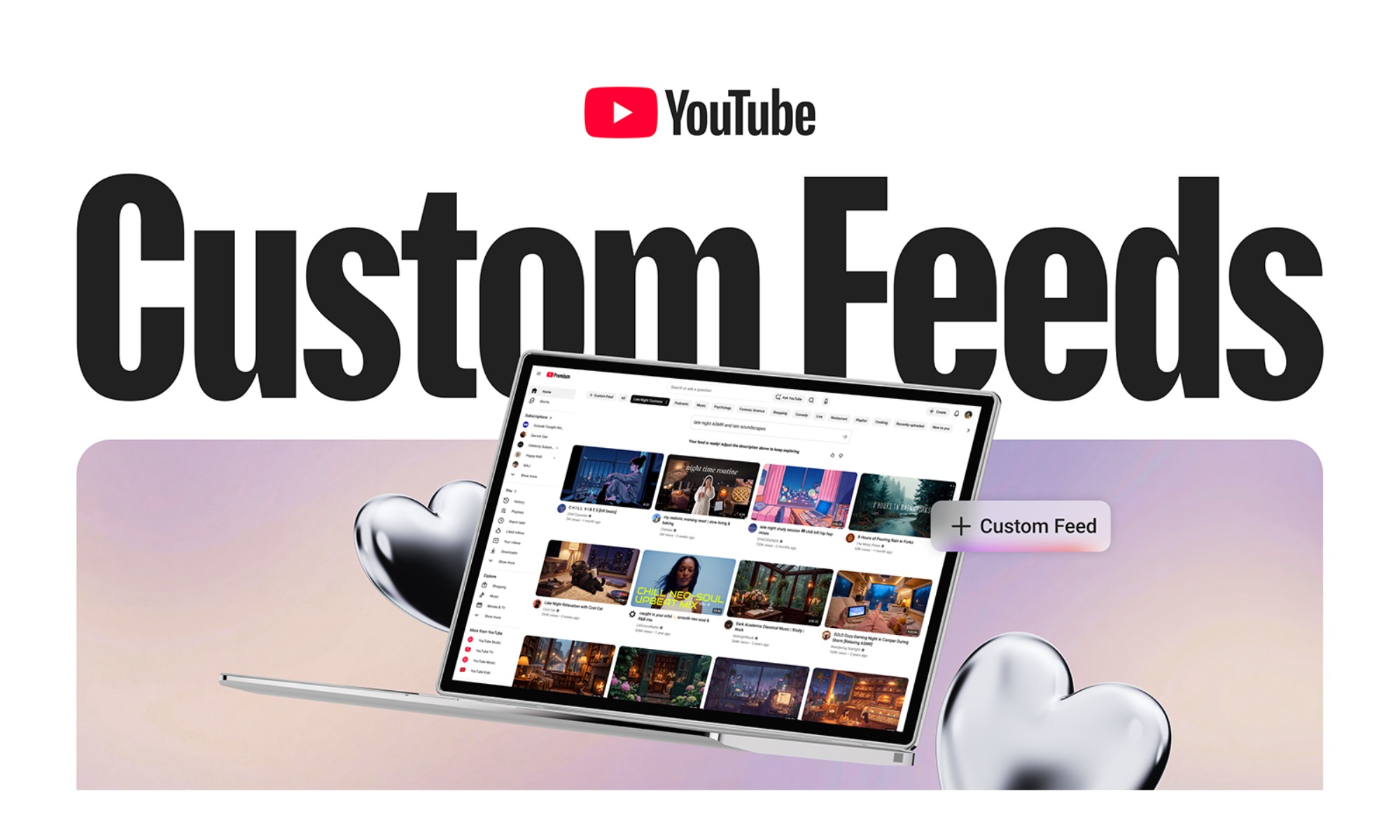
YouTube → Testing a Shorts bonus for invited creators, with some invites offering $300 to $2,000 a month for 16 Shorts → Reposting other people’s Shorts without adding anything of your own will get you less reach → In the US, viewers can type what they want to watch and get a custom Home feed (up to 3, or 8 with Premium) → Subscriptions moved to a Subs tab at the top of Home
Instagram → Almost 45% of the Reels it recommends are less than a day old, up 11 points since Q2 → Linked Reels series are going away starting Oct 28 → On iPhone, you can play another Reel in your camera as a guide while you film → The Edits app can make carousels now (iPhone first), and its new AI assistant looks at your account stats
LinkedIn → Creators get a new dashboard, and US Business Premium members can sell paid one-on-one advice sessions → Some US creators are testing getting paid from ads that play before their videos → Testing a split feed with one tab for people you follow and a For You tab with recommendations
TikTok → Signed a multiyear deal with Made By Us to make short series led by creators, for TikTok and PineDrama
Threads → Has more monthly users than X now, Zuckerberg said on Meta’s Q3 call → Started giving Gems to original posts and replies that spark real conversation (US only for now)
Meta → On Facebook, you can type what you want to see more of and the feed adjusts → Starting Oct 28, people can browse products right inside existing Facebook and Instagram ads, unless the advertiser opts out
Legal → A New Mexico judge ordered Meta to pay $25 billion for misleading users about data privacy, and Meta says it will appeal → Turkey’s ban on social media for kids under 15 starts Nov 1 → Greece passed its own under-15 ban on Oct 23, and it starts Jan 1
Reddit → Testing a 12-hour pause for accounts that post the same thing in too many communities → Advertisers are getting AI tools that forecast campaign results and score how well a campaign is set up
 Siddharth
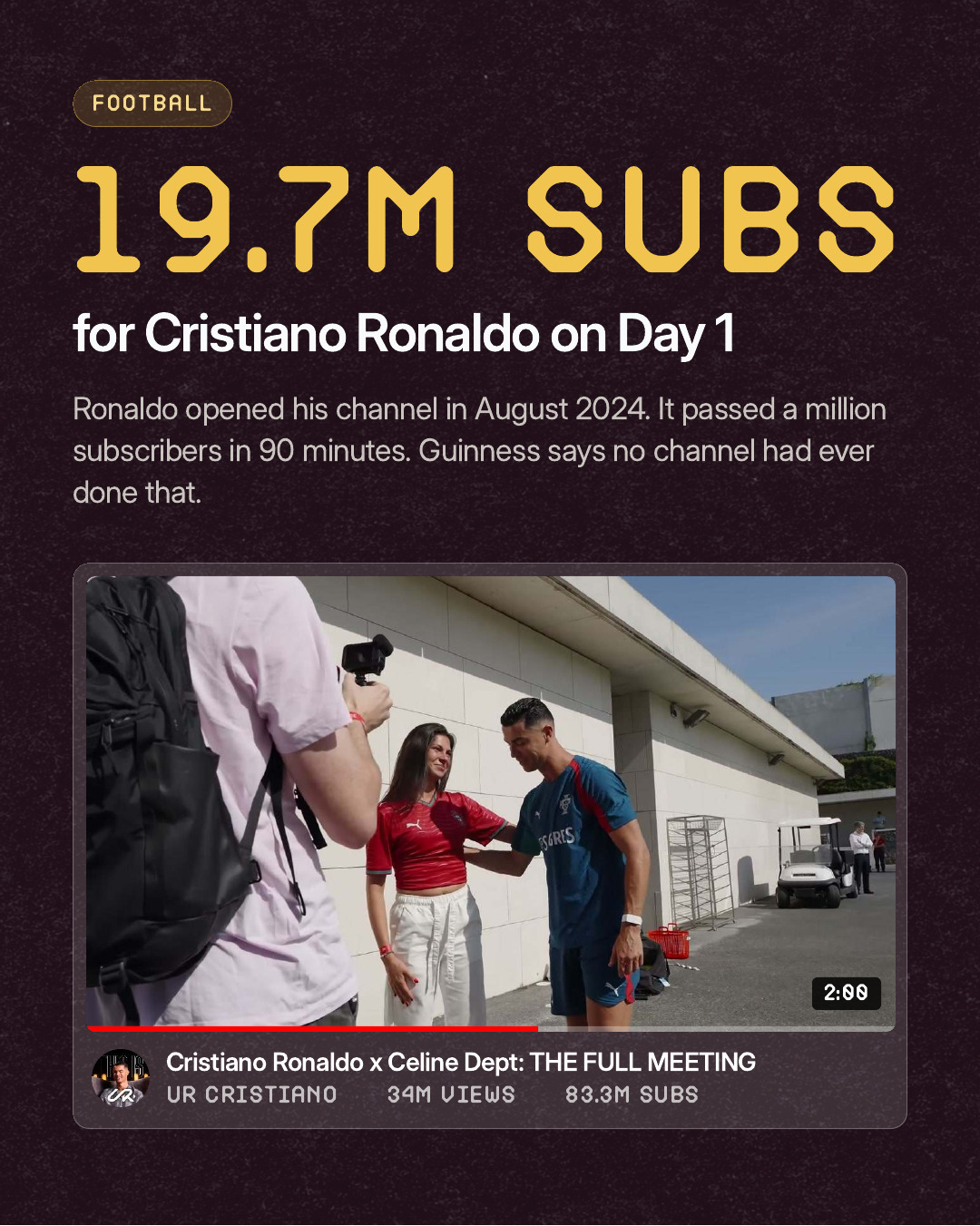
Your favorite athlete is now a YouTuber.
Cristiano Ronaldo got 9.7 million subscribers in 24 hours. He’s Cristiano Ronaldo, I actually would have expected more.
And it’s not just him ↓
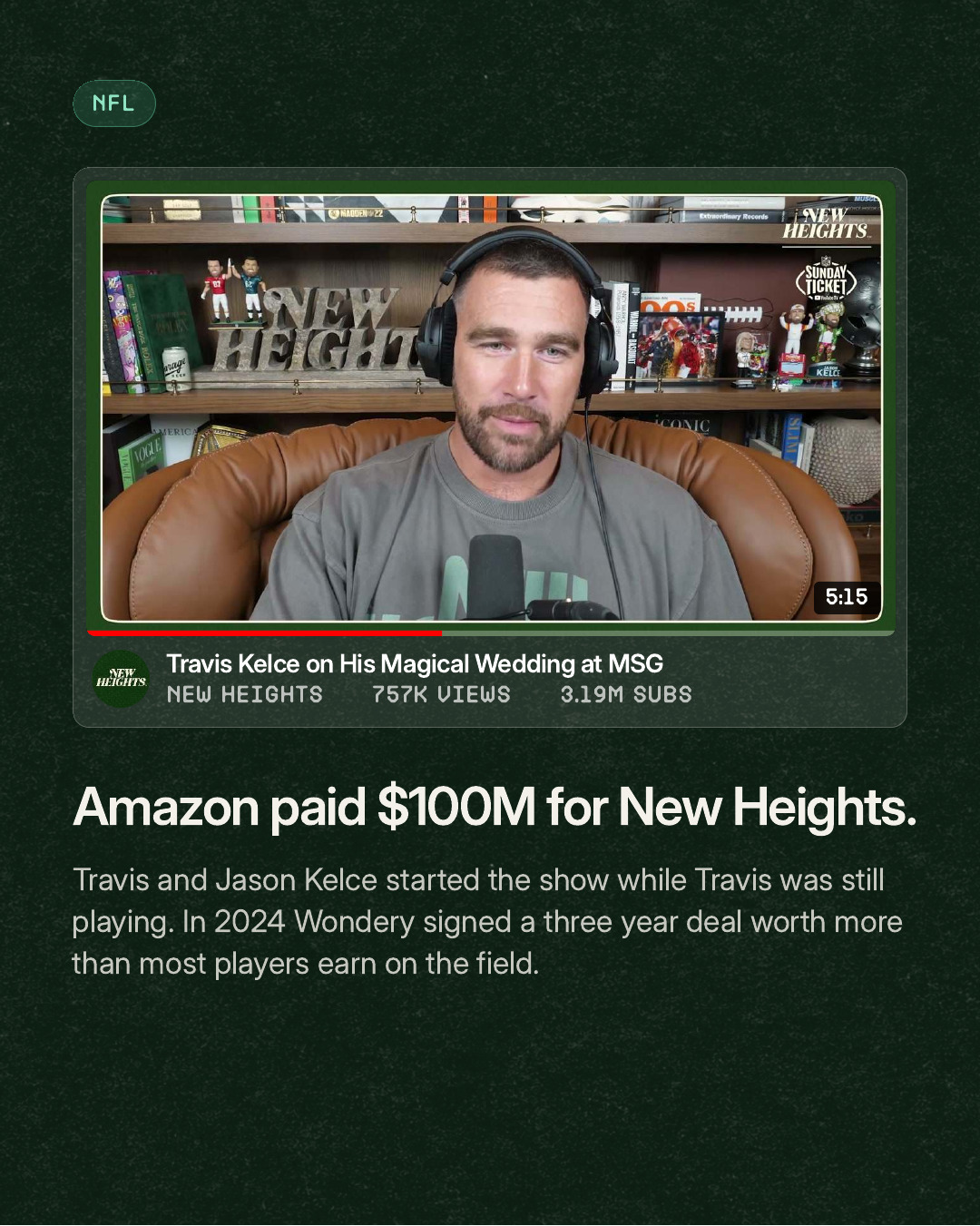
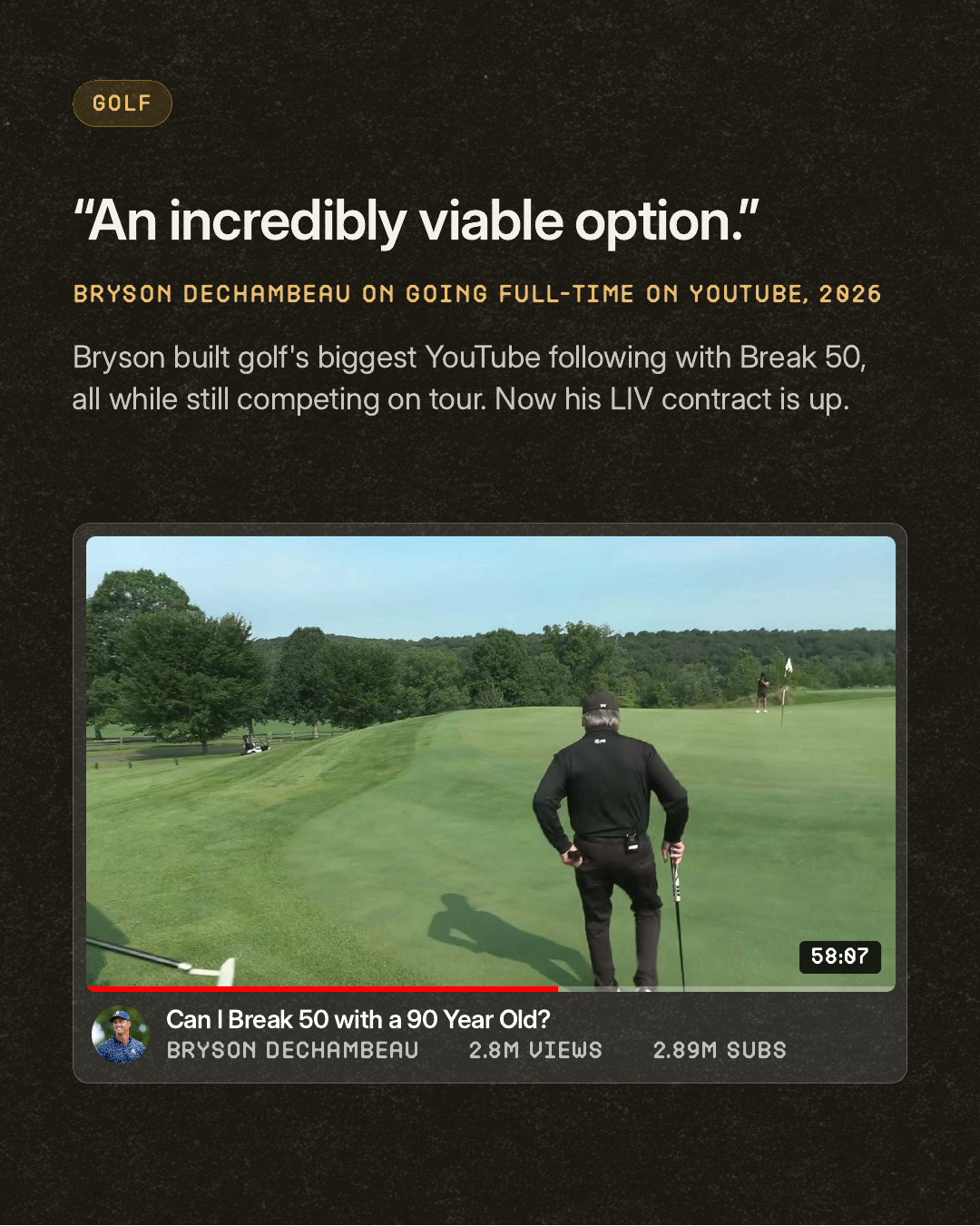
→ Bryson → Steph Curry → Shaq → The Kelce brothers
They’re all going to YouTube.
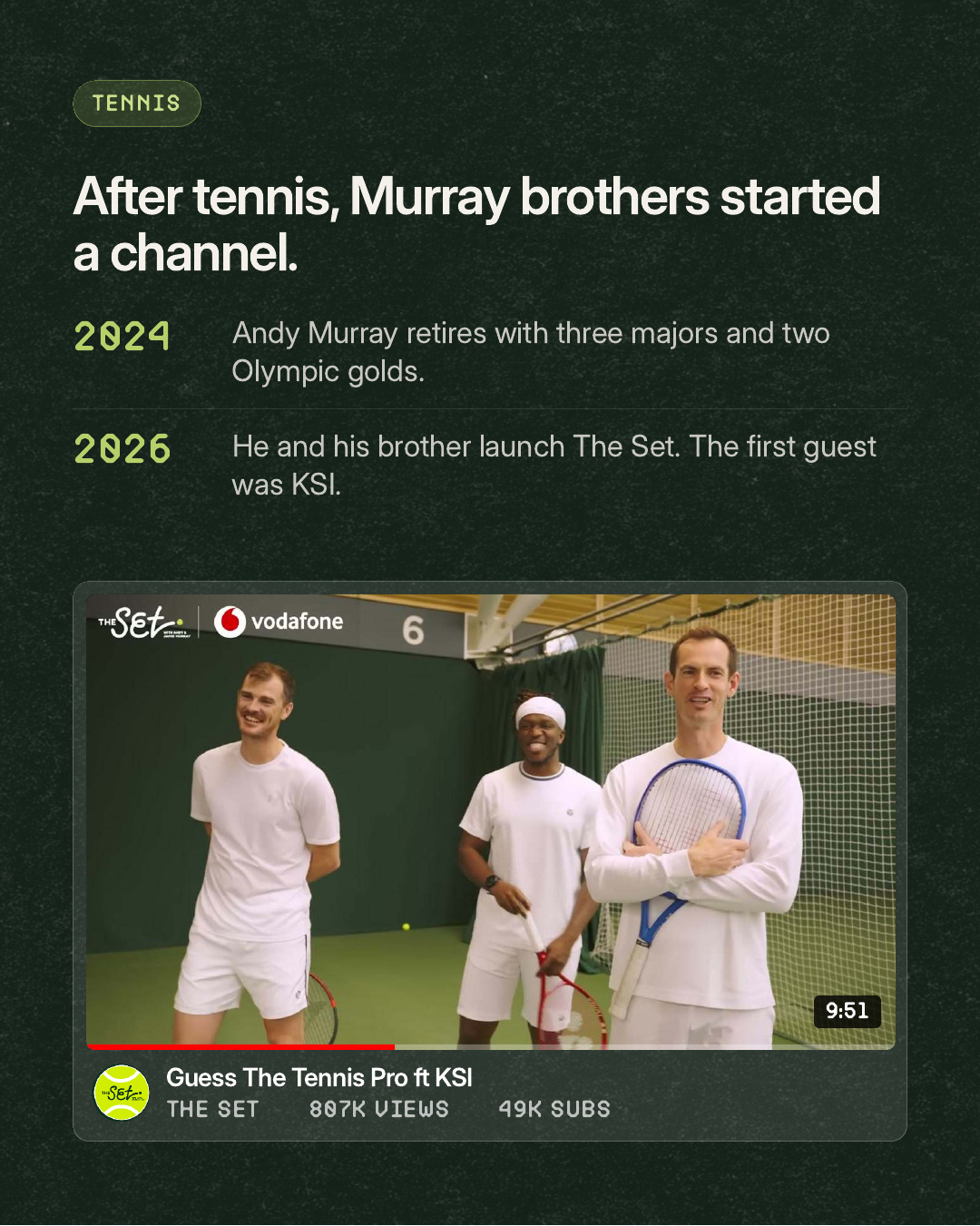
Did you see Andy Murray? The most underrated tennis player of all time in my opinion, a Grand Slam champion. And he’s literally rendered himself to be just a YouTuber making collaborations with KSI.
I think this speaks to a much bigger point. You don’t own anything on social media, and you also don’t own anything in real life.
Athletes don’t even own the rights to their own media most of the time. College athletes have NIL now, but what do they really own? Actors don’t own their own movies. That’s all big film production and big sports.
On YouTube, yeah, you don’t own the platform, and you still give it a big cut. But you do grow your audience.
That’s why I don’t think this is ever going away. More and more athletes are going to push their own media, even as social media gets saturated.
This is their next act.
#marketing #athletes #youtube
 Siddharth
How Anthropic built a YouTube strategy around deep work, trust, and technical credibility while competitors chased virality.
Siddharth After this one ad campaign, Avis went from a $3.2 million loss to $1.2 million in profit.
A lot of modern marketing companies just try to follow marketing trends or what seems good. I don’t think a lot of them truly use the psychological principles that this ad campaign did.
When this ad came out, Avis was second in the rental car market, behind Hertz. So they positioned themselves as “trying harder”.
There’s three reasons why it worked:
→ It gets your attention → It sticks with you → You get a positive impression
No one ever admits that they are second, so it gets your attention.
Two months from now, you’re still going to remember it because of this psychological principle called “neurons that fire together, wire together”.
Our brain is filled with neurons that are firing all the time.
Drink coffee → you’re firing neurons Wake up → you’re also firing neurons
If whenever you wake up, you drink coffee, those neurons are gonna fuse together. Not in the literal sense, but they’re gonna start activating at the same time.
Avis fuses themselves indirectly with Hertz. They never say Hertz in the ad.
But because they positioned themselves as second, when you think of Hertz, you’re gonna think “okay, what’s the alternative to Hertz? It’s Avis.”
None of this matters if you don’t actually have a positive response to the company. They did that because:
→ They’re honest, they said they were second → They made it a very relatable experience. Being second, being undervalued, so you have to work harder to push through.
It’s a very human experience. And that’s what every great ad needs.
If you want examples of some really good ads, you can go to benchmark dot social. We have a list of a bunch of iconic ads with a full analysis on them, so you can really understand why they work.
#marketing #advertising #psychology
 Siddharth
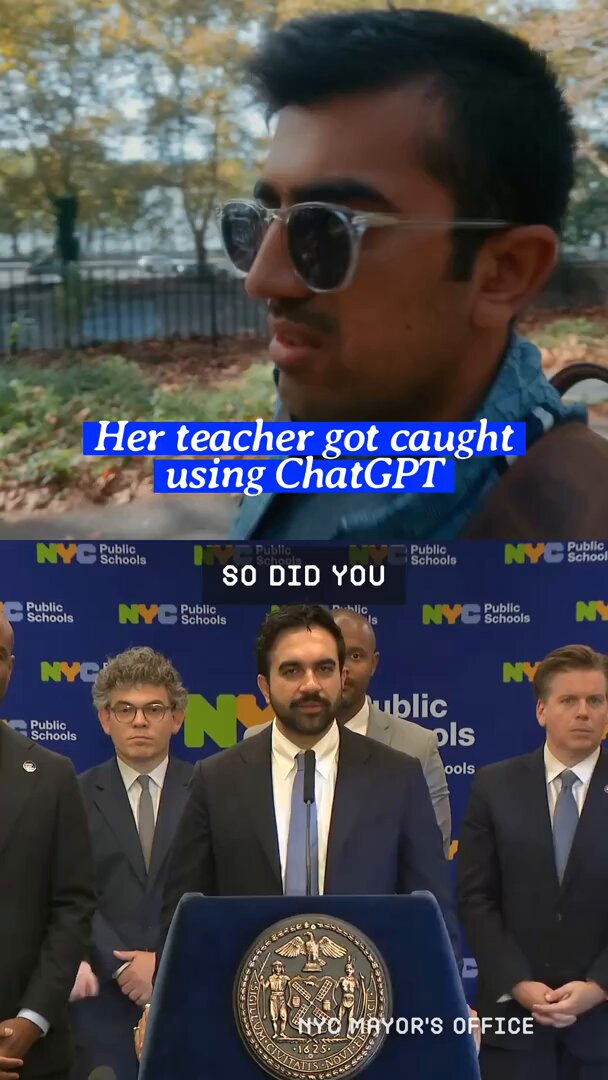
So a college student caught her professor using ChatGPT to make his lecture notes.
And the syllabus for that same class banned students from using AI without permission.
She asked for more than $8,000 back, and the school said no.
Which means the professor gets to use it and the student doesn’t.
It’s the same thing in NYC right now. Teachers can still use AI to plan lessons, but students through 8th grade can’t use it in school.
I get why teachers are worried. A lot of students are gonna use it to cheat.
But banning it in class doesn’t stop them from using it at home.
On the other side, a student who actually wants to learn now has a personal tutor most families could never afford.
One teacher with 30 students can’t give everyone the same attention.
The problem is the education system hasn’t really changed since the Industrial Revolution.
So as long as that’s true, I’m all for students using AI.
The fix, however, is 100% the flipped classroom:
Lectures → at home, as videos you can pause and rewind Homework → in class, where teachers can actually help, with no AI Essays and exams → old school, in person
A lot of students don’t like it because it feels like more work.
But you can control what happens in a classroom, and you can’t control what happens at home.
 Siddharth
So I read this book called Positioning, and it had this really interesting and weird take. They said that if your name is Hubert, you’re a loser.
The authors of this book are a hundred percent convinced that one of the most important things in life is your name, and you can’t really change it.
So the thing is this might seem obvious for a lot of us, there’s a lot of studies out there saying that people with Asian names had to deal with a lot more bias, make it harder for your job application, even if the resume is all the same. But the authors of this book, I think they take it a bit too far.
They gave examples of Hubert, Elmer, and then they have David and Michael. They cited this one study where they gave teachers the same exact assignments, and they just changed the names. They said that the teachers who graded the students with the more common names gave them better grades.
But in reality, this actually makes sense from a psychological perspective. You have to understand that your first name is the first impression that you’ll ever have. Even before you speak or enter the room, that is your first impression.
We’re very dumb creatures in this way because we already create an impression of you just based on your name, and we’re too lazy to change that. It takes too much energy, too many calories for us to change.
So maybe legally change your name if you want to.
Siddharth So, I had to get lunch today, but I was on a budget. So I went to Costco and just had the free samples.
Because you might think I’m cheap, but in reality they’re not free.
And I think you might be thinking that they’re not free because they make you buy the product, but no, it actually has nothing to do with that. It has to do with this concept of reciprocity.
This is the fancy term of just saying that if someone helps you, you’re gonna help them back. This is true for thousands of years in psychological history, and the reason is that when humans work together, they usually survive more.
Well, you might be thinking that doesn’t have anything to do with Costco free samples, but it really does. Because if you like the free sample, you’re gonna most likely buy the product.
But what people don’t know is that even if you don’t, Costco is giving you something for free. One, it’s gonna make you like them, but two, you might end up just buying the product simply because you feel guilty.
 Siddharth
When I was younger, I couldn’t wait to go home and turn on ESPN. It was a daily ritual, one show after another.
ESPN’s main guy, Stephen A. Smith, has been doing literally the same exact show on First Take for 14 years.
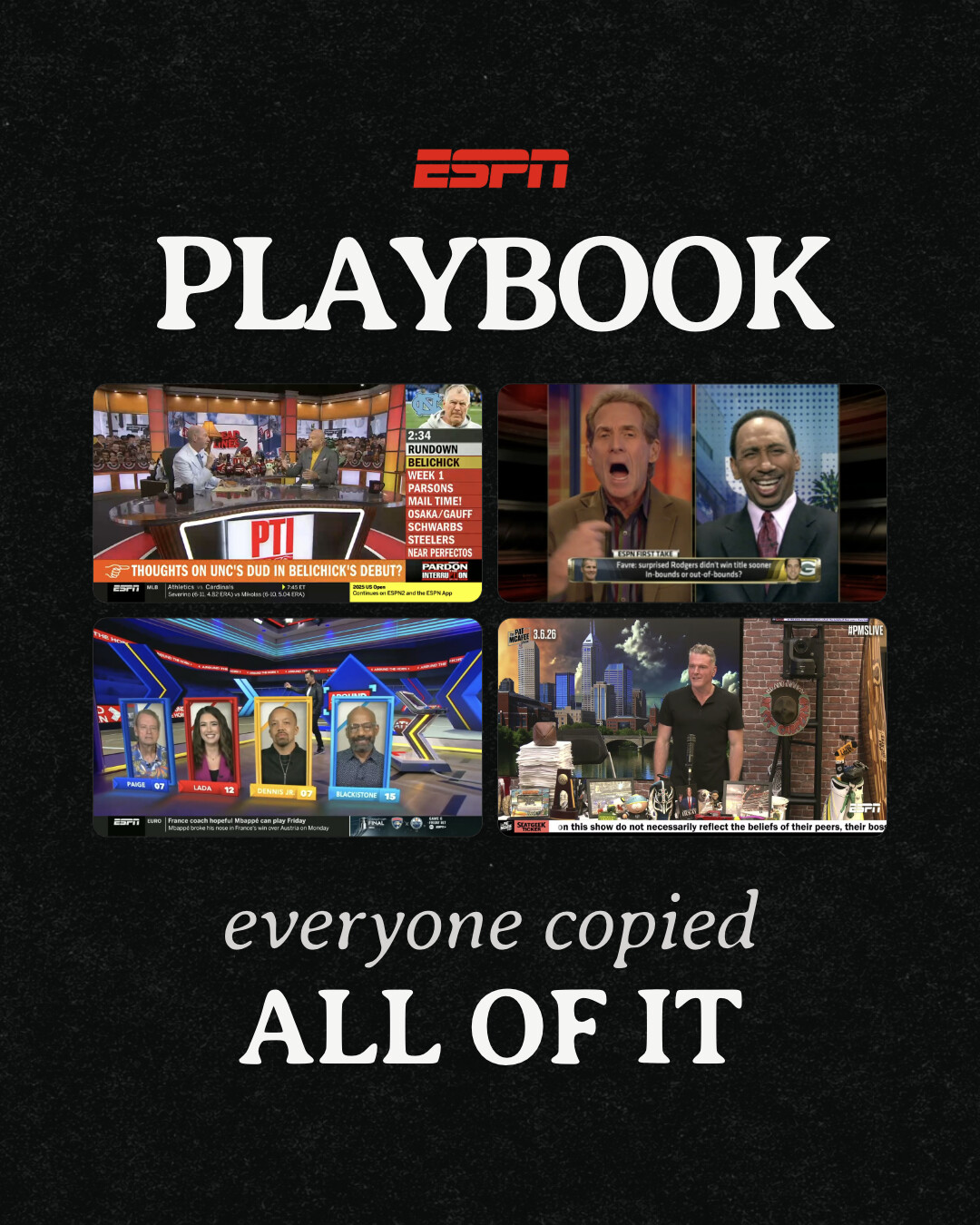
If you think about it, every single person at ESPN is running the same few formats, over and over, and that playbook has permeated throughout the rest of the content world.
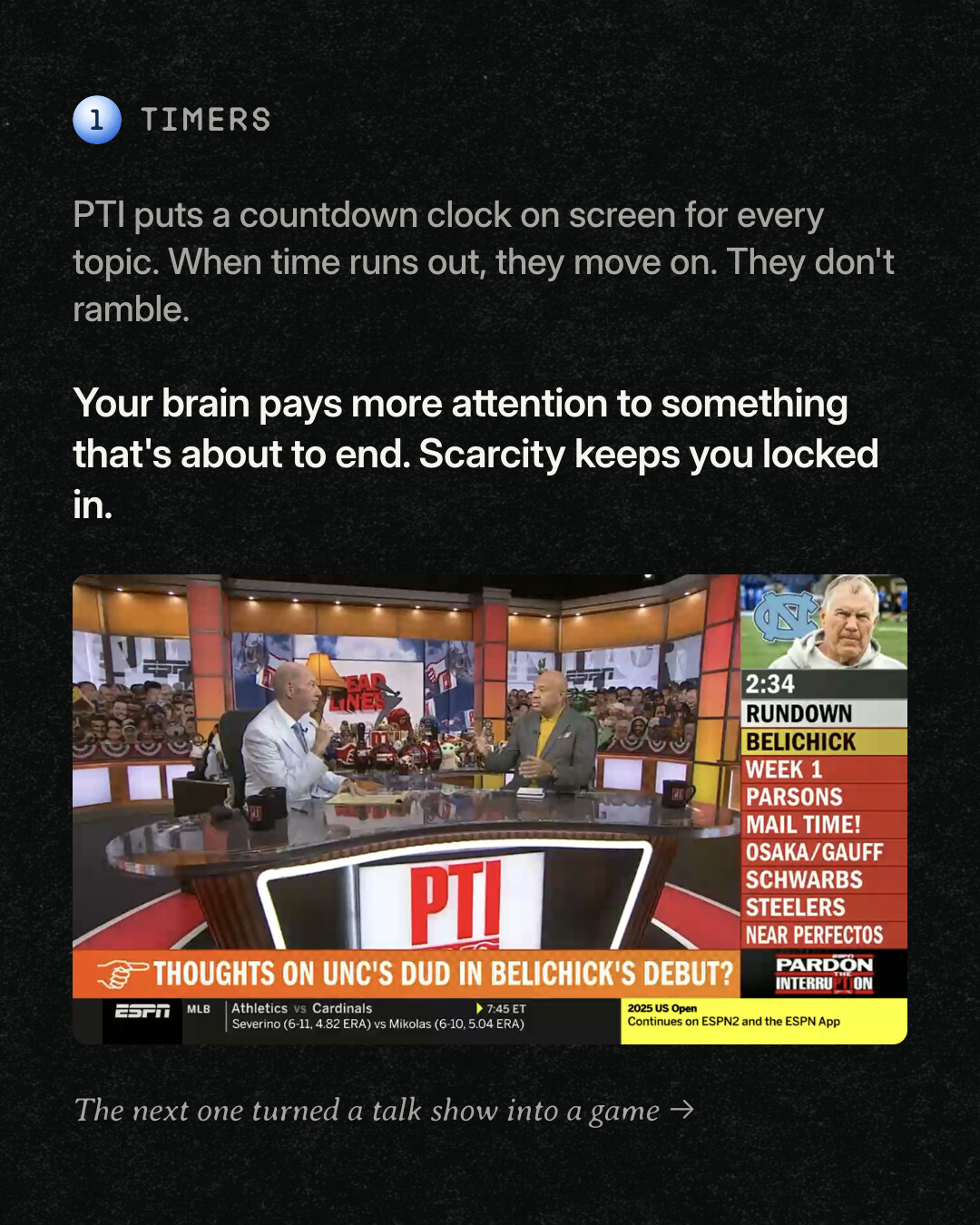
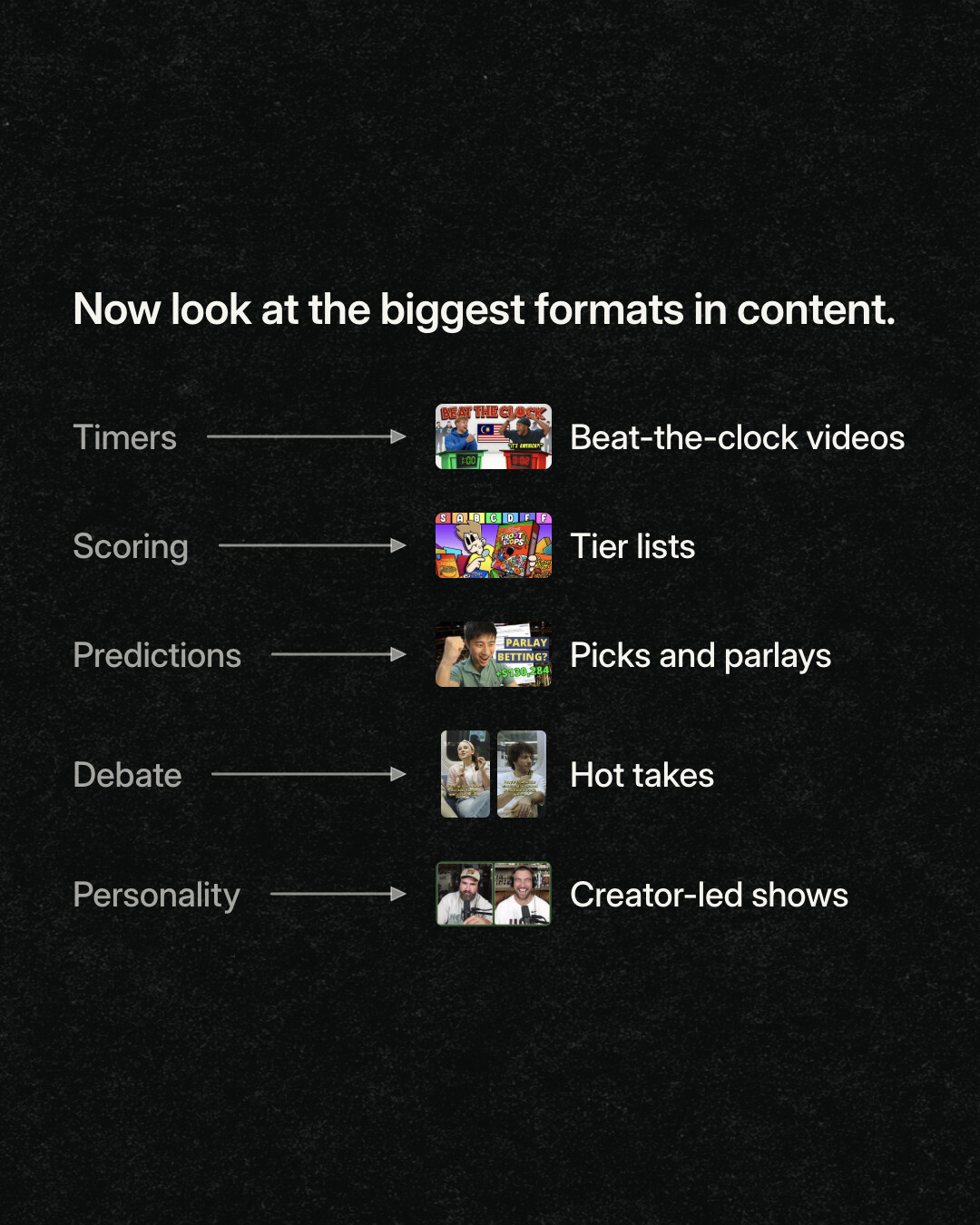
Timers → Beat-the-clock videos PTI puts a countdown clock on screen for every topic. When time runs out, they move on. Your brain pays more attention to something that’s about to end.
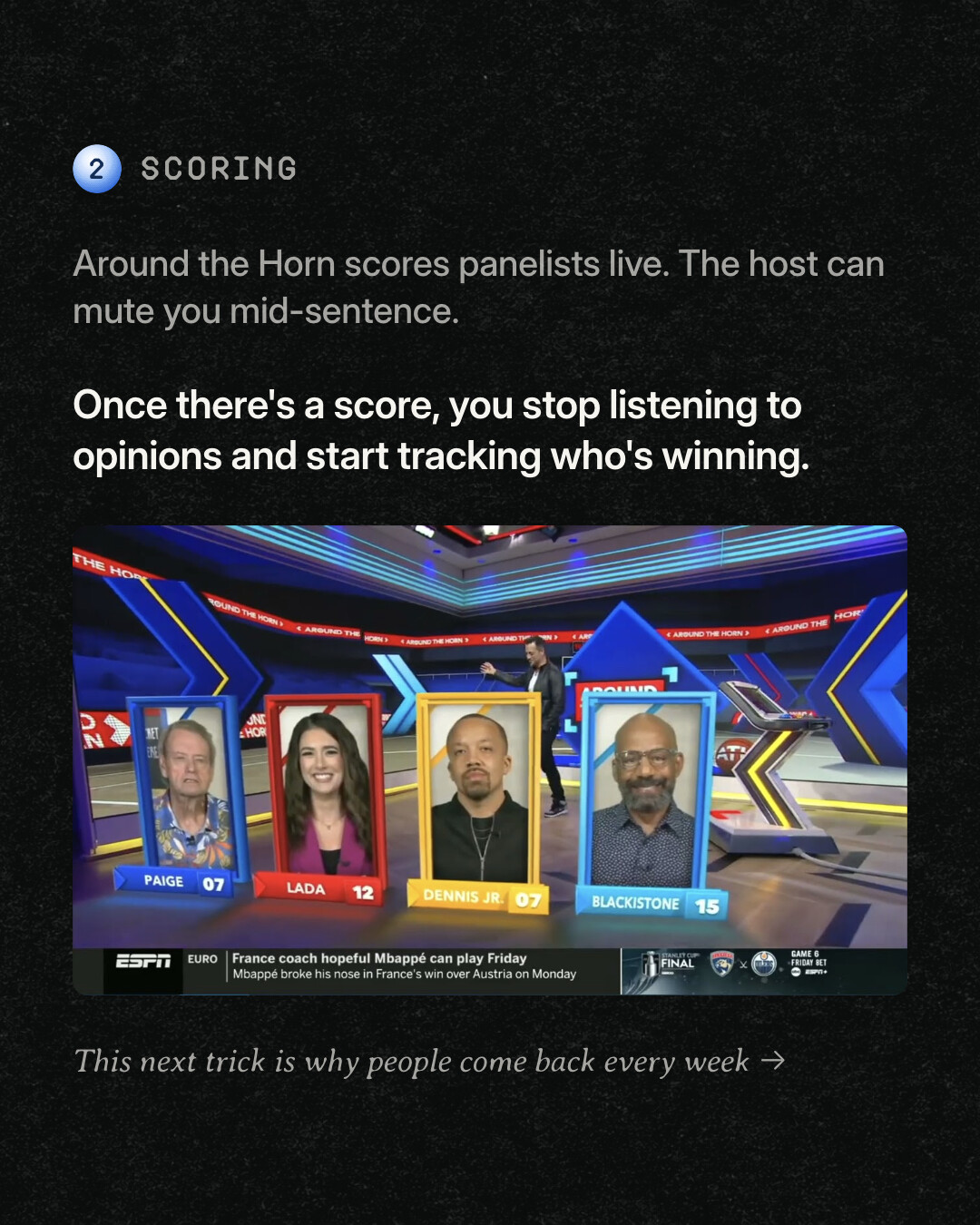
Scoring → Tier lists Around the Horn scores panelists live. The host can mute you mid-sentence. Once there’s a score, you stop listening to opinions and start tracking who’s winning.
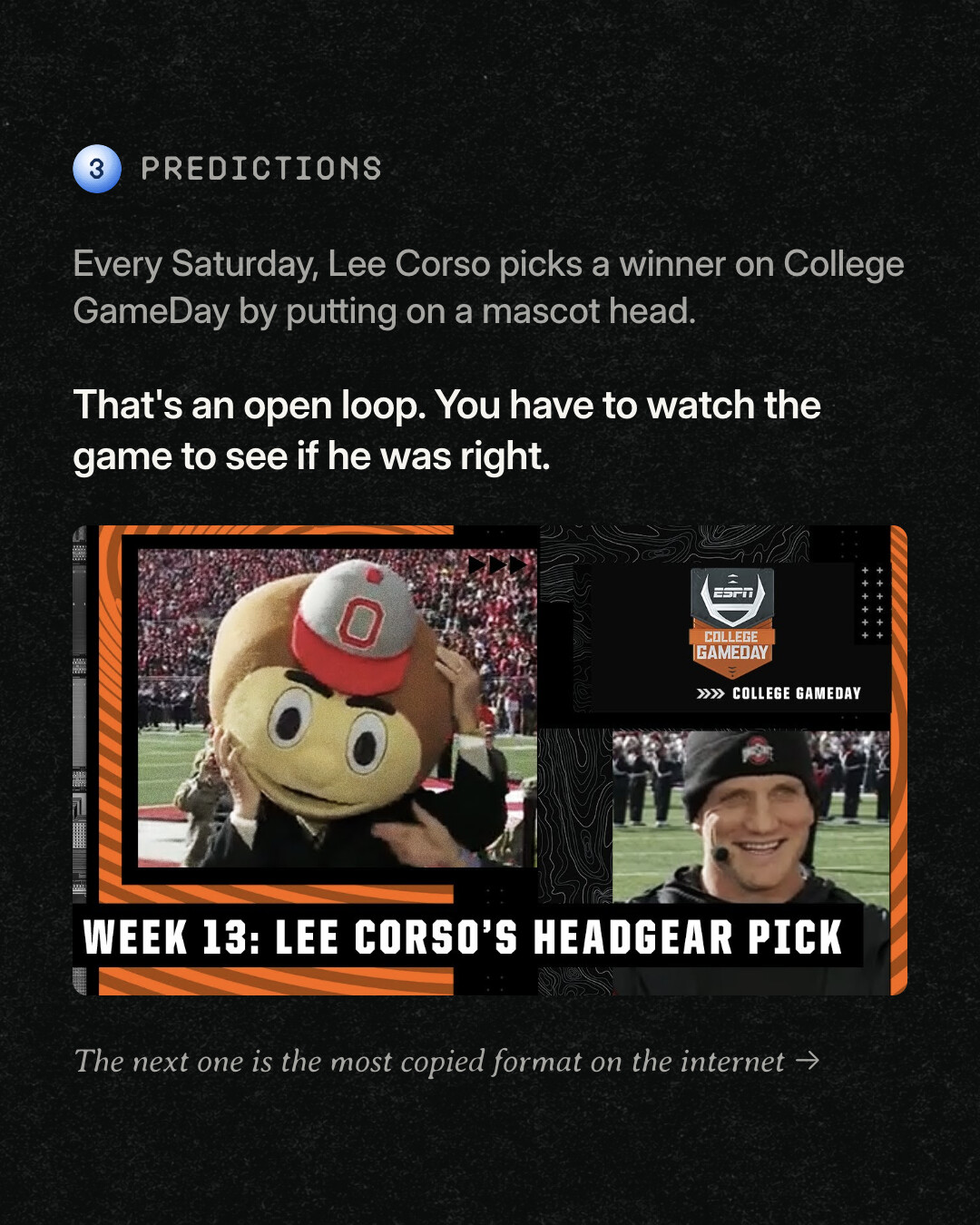
Predictions → Picks and parlays Every Saturday, Lee Corso picks a winner on College GameDay by putting on a mascot head. You have to watch the game to see if he was right.
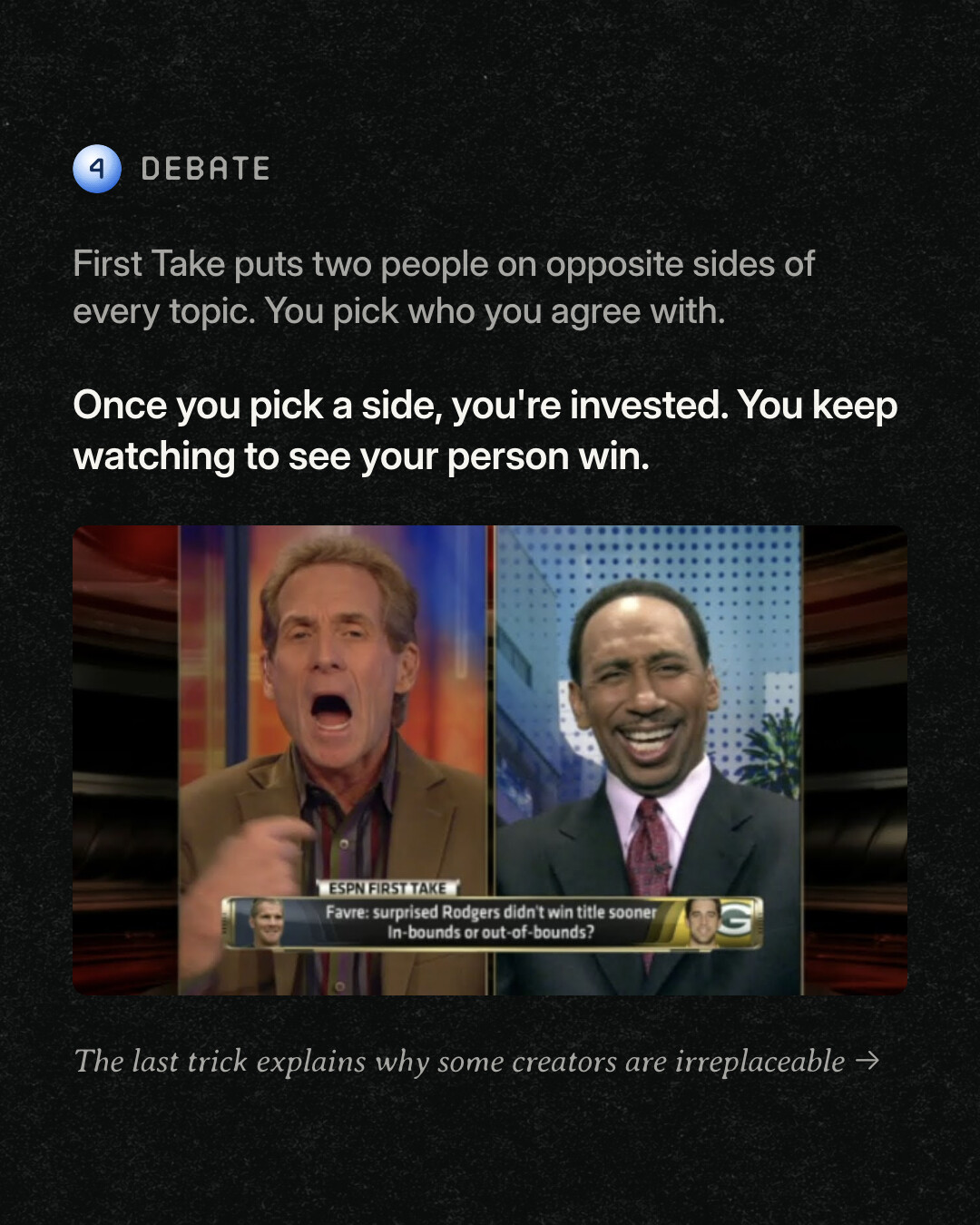
Debate → Hot takes First Take puts two people on opposite sides of every topic. Once you pick a side, you keep watching to see your person win.
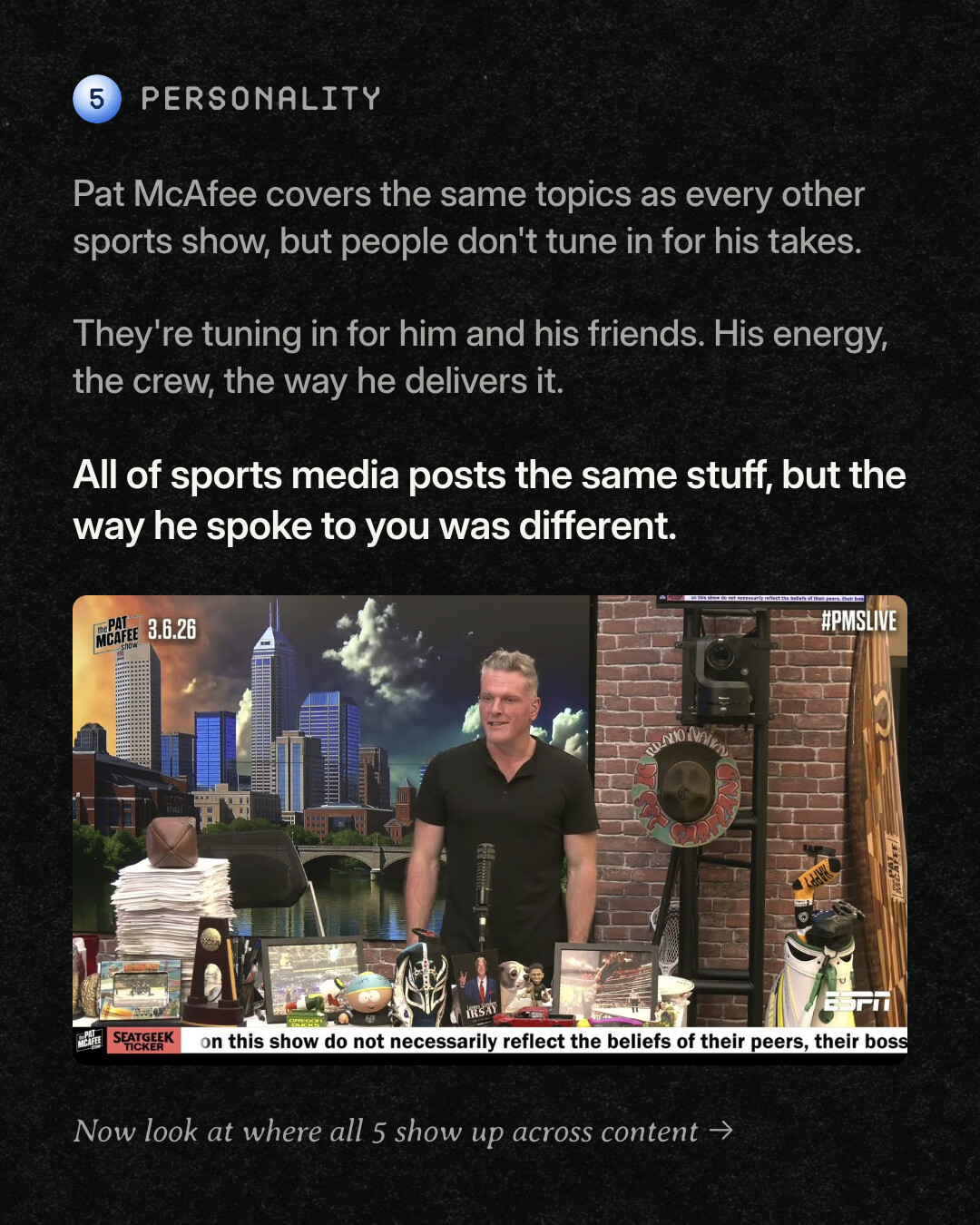
Personality → Creator-led shows Pat McAfee covers the same topics as every other sports show. People tune in for him and his crew, not his takes.
These worked in 2001 and they still work in 2026.
 Siddharth
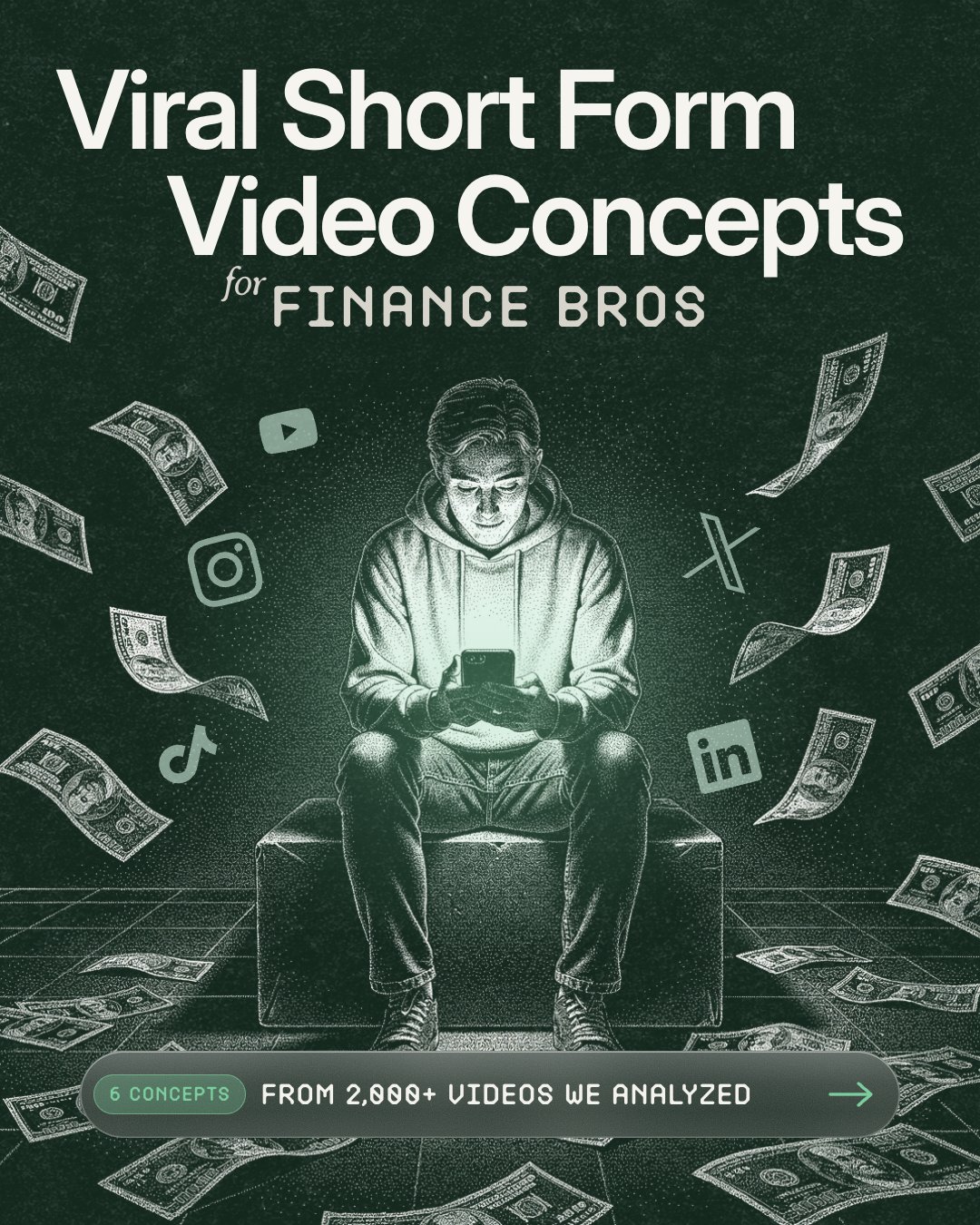
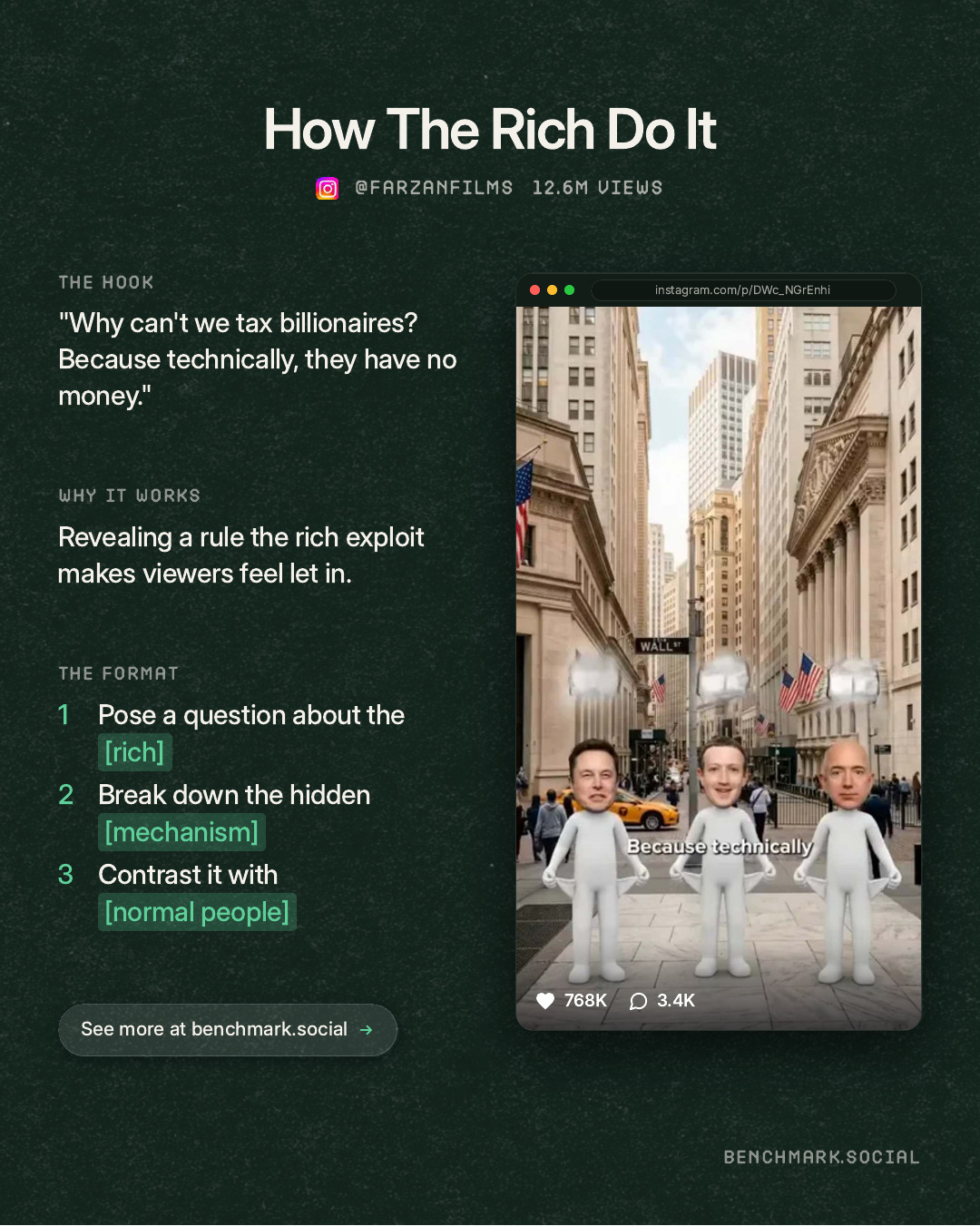
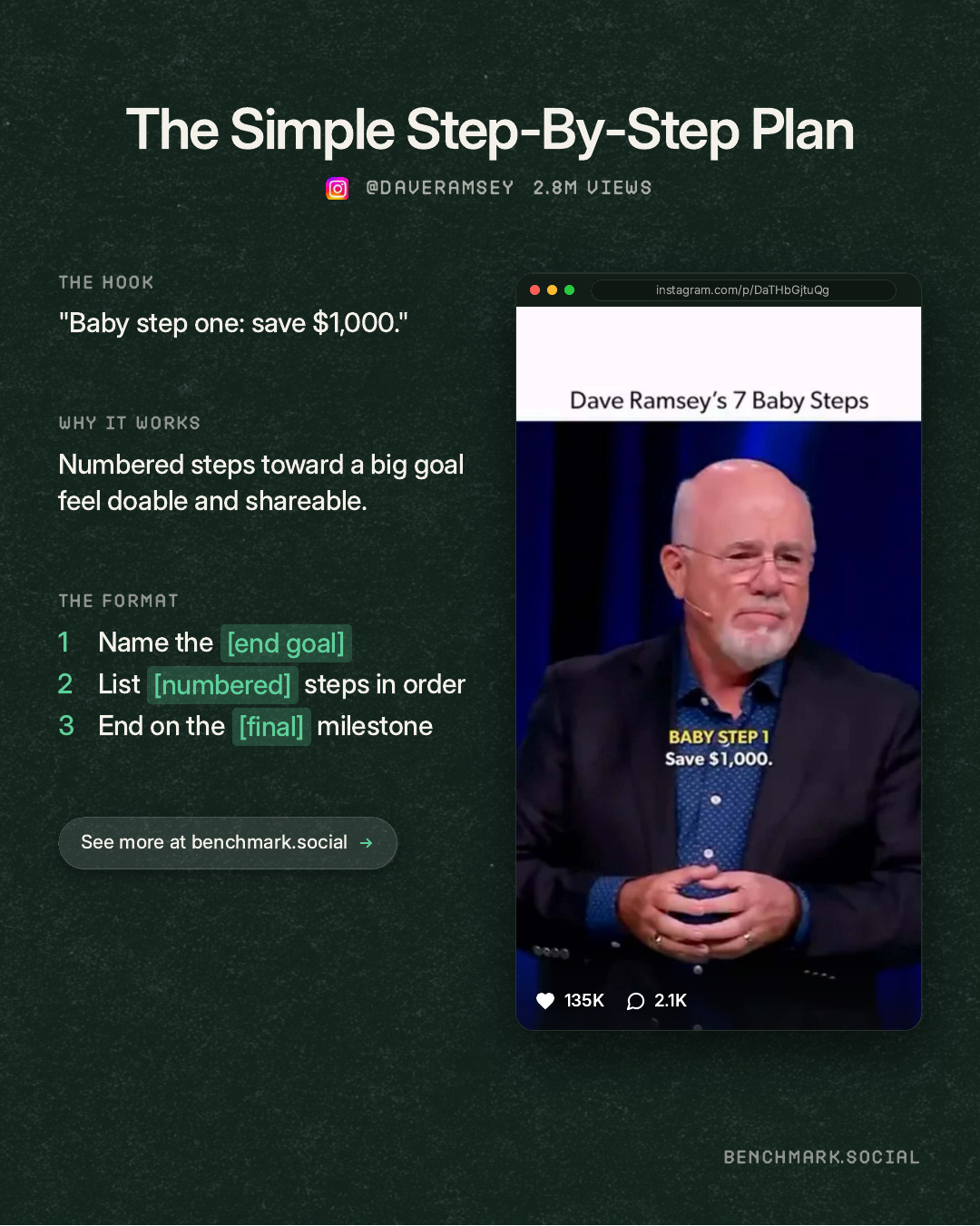
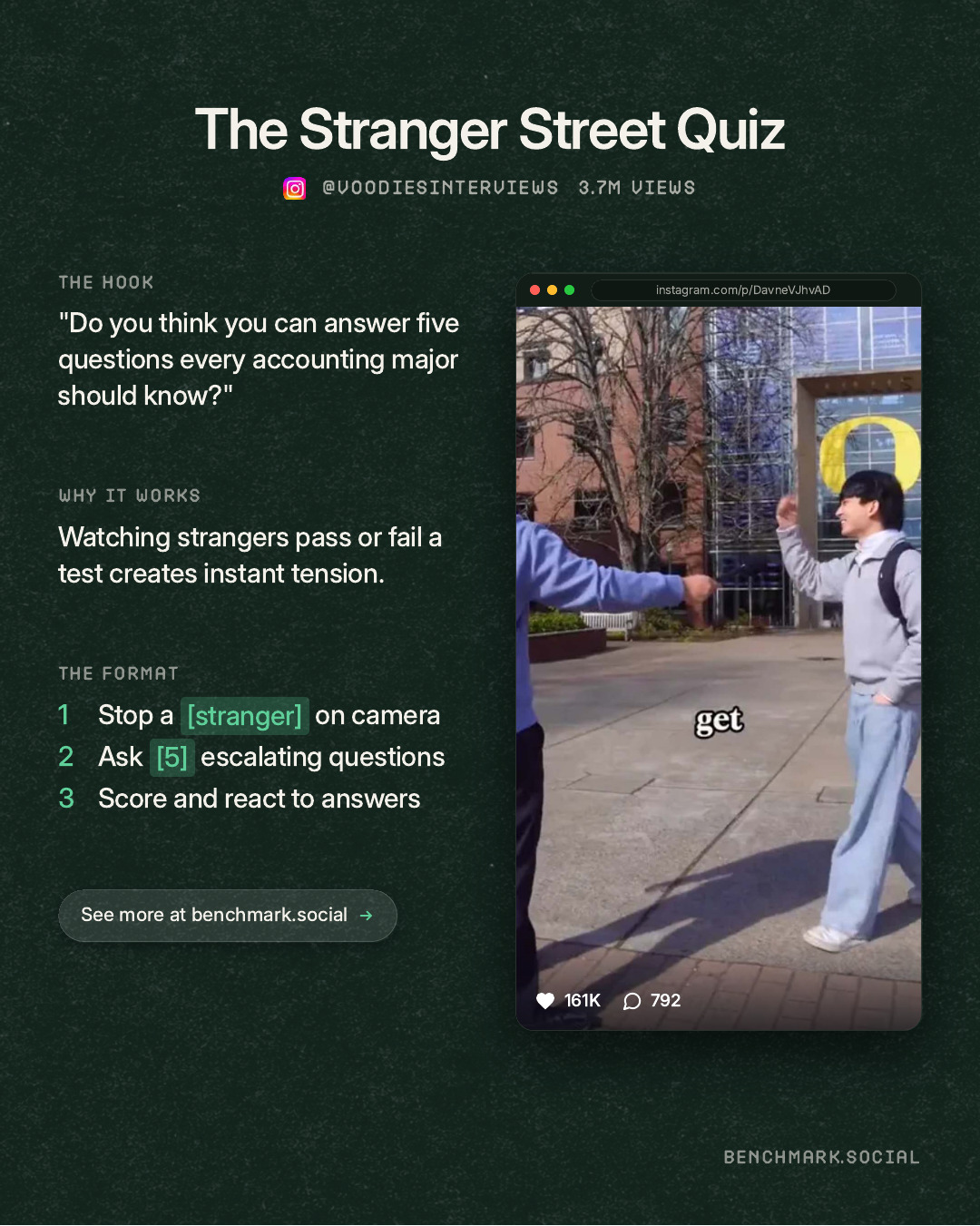
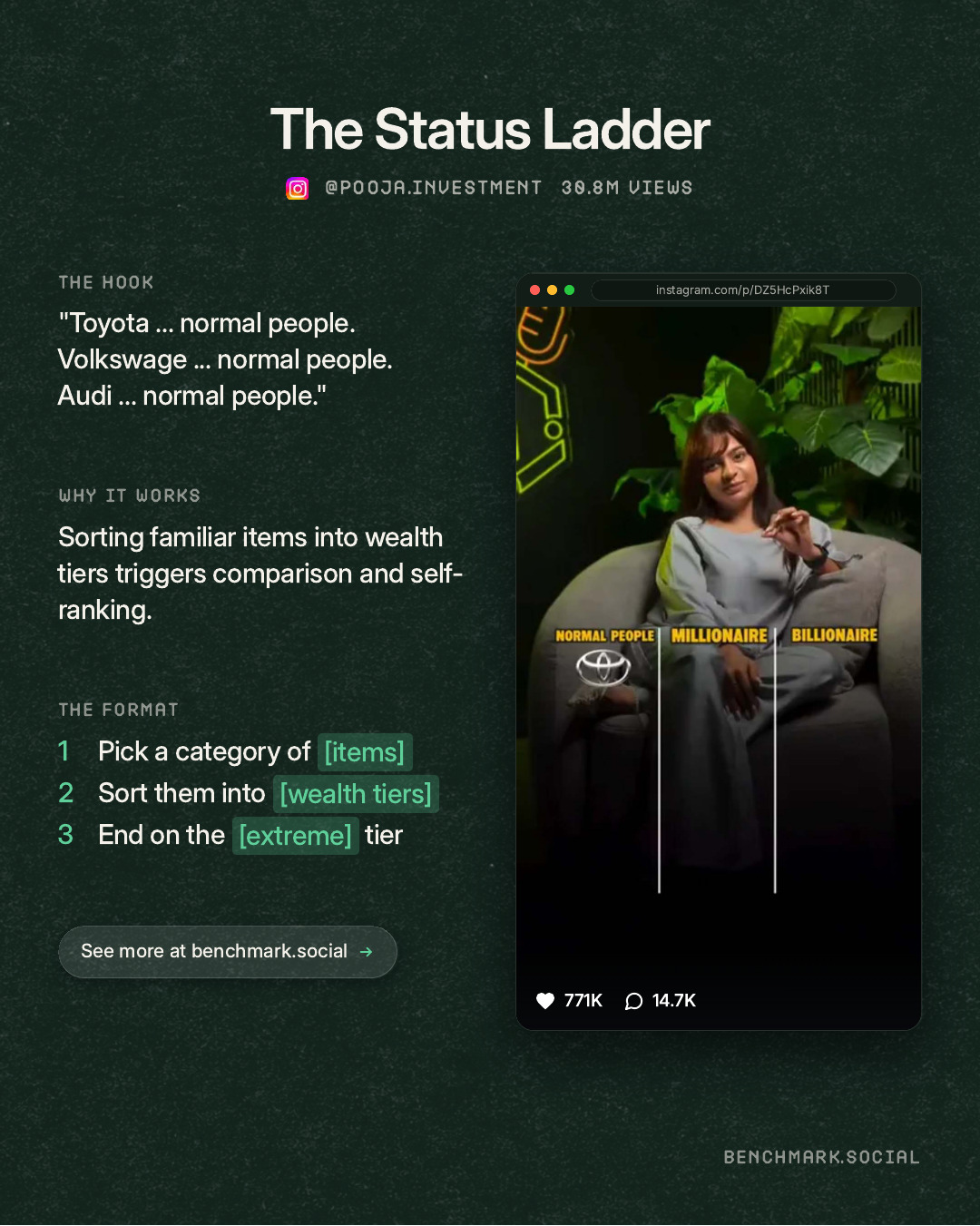
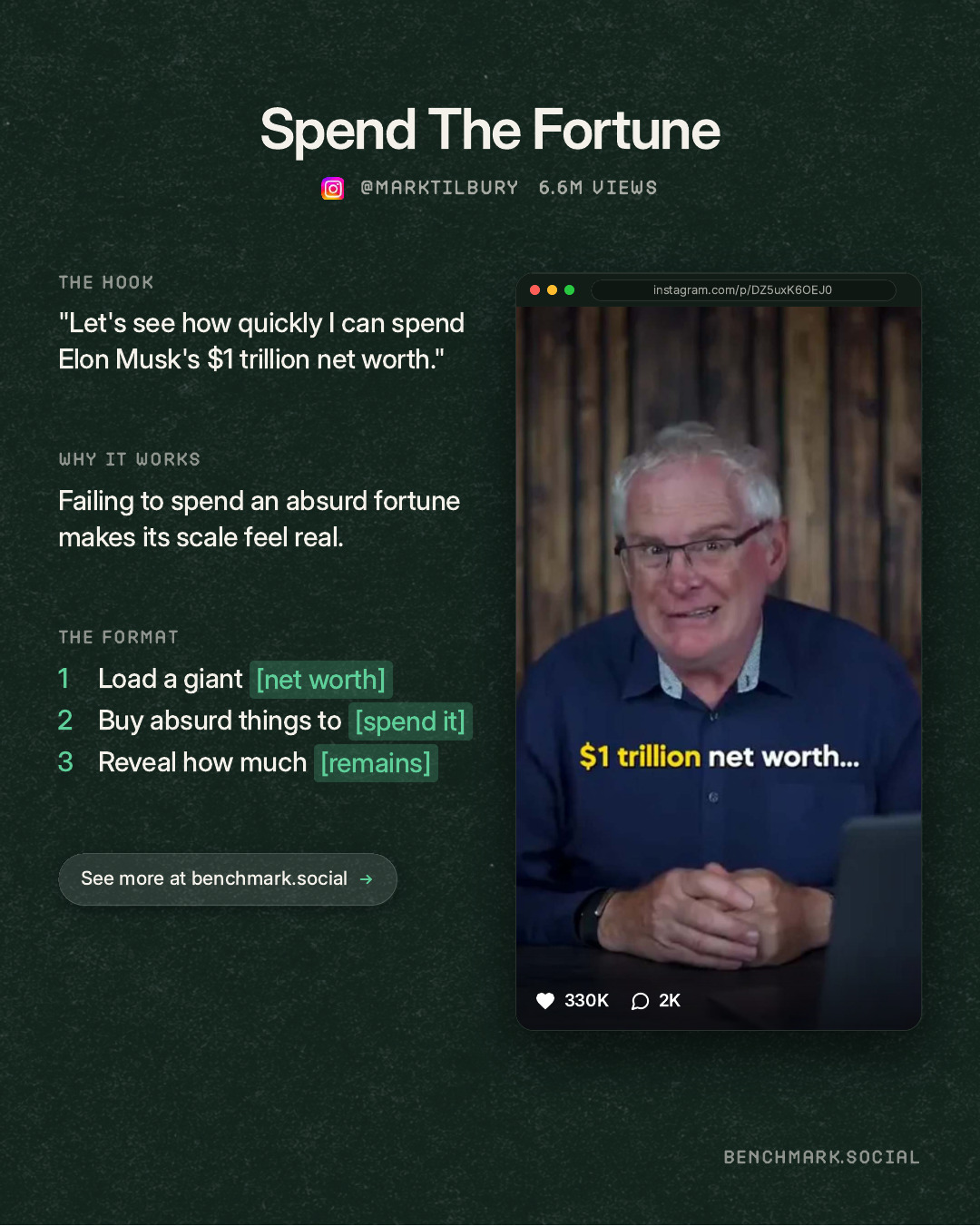
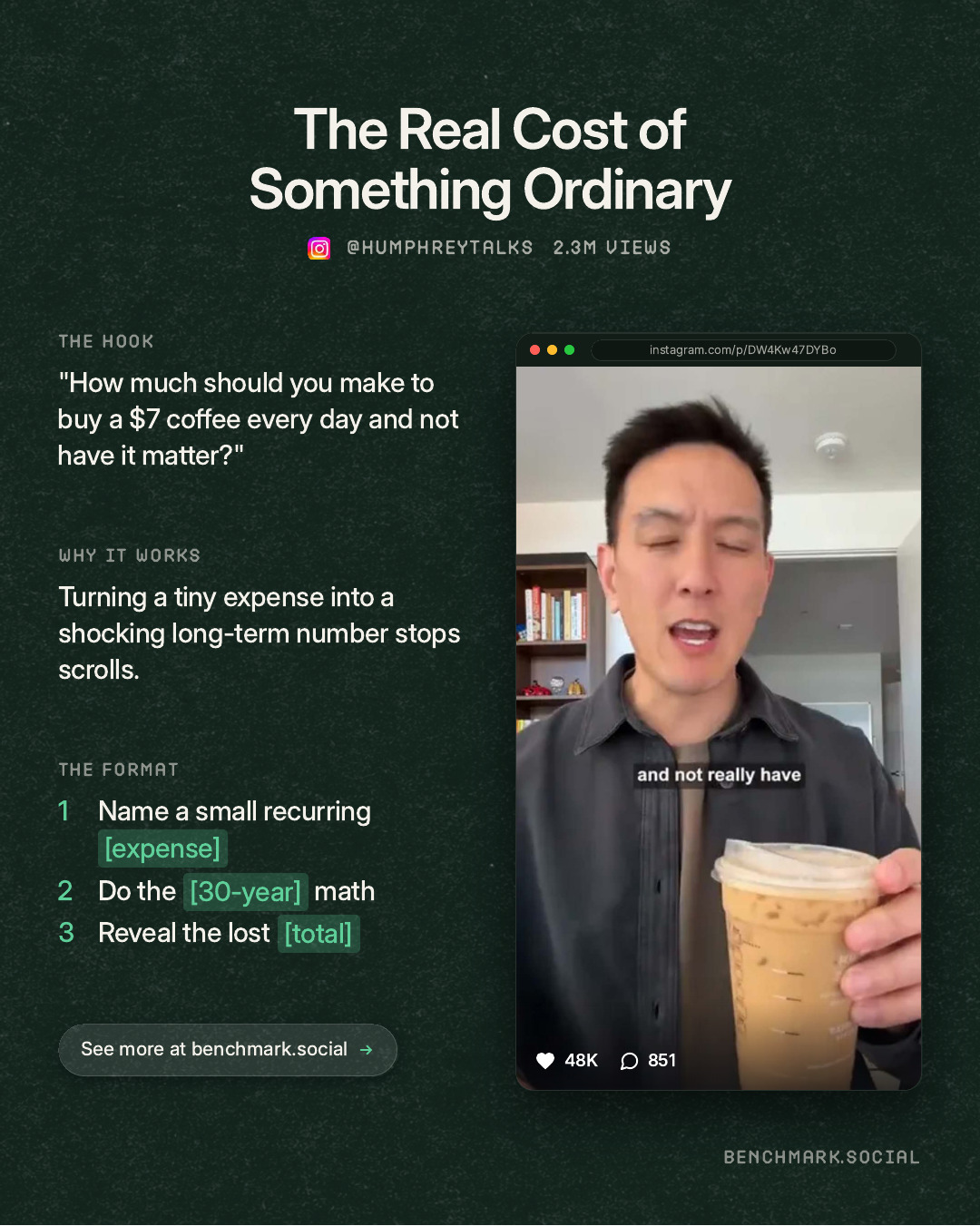
Yesterday I looked at 2174 of the most viral shorts to figure out what actually made them go viral.
Every day I’m going to break down a new niche for you (the concepts, hooks, formats, and psychology behind them).
Today we’re doing money and finance. Here are 6 concepts inspired by the best
(even if you’re not in the niche, think about how you’d use them for your own videos).
lmk if you want the full list
 Siddharth
Everyone thinks Google’s AI is gonna go nowhere and they’re gonna lose the race, and it’s probably true.
But because Google is losing the AI race, they have nothing to lose.
So that means they can make everyone lose with them.
→ The Gemma models are good for the size that they are → I ran the 12B parameter model on my local mac and it was not bad at all → The 2B and 4B ones are pretty good for those sizes → The voice dictation they released with Gemma now is solid
If these local models could eventually get so great, all these companies are gonna go down since you can just run these models in your phone or in your computer.
And Google just might end up winning by making everyone else lose with them.
 Siddharth
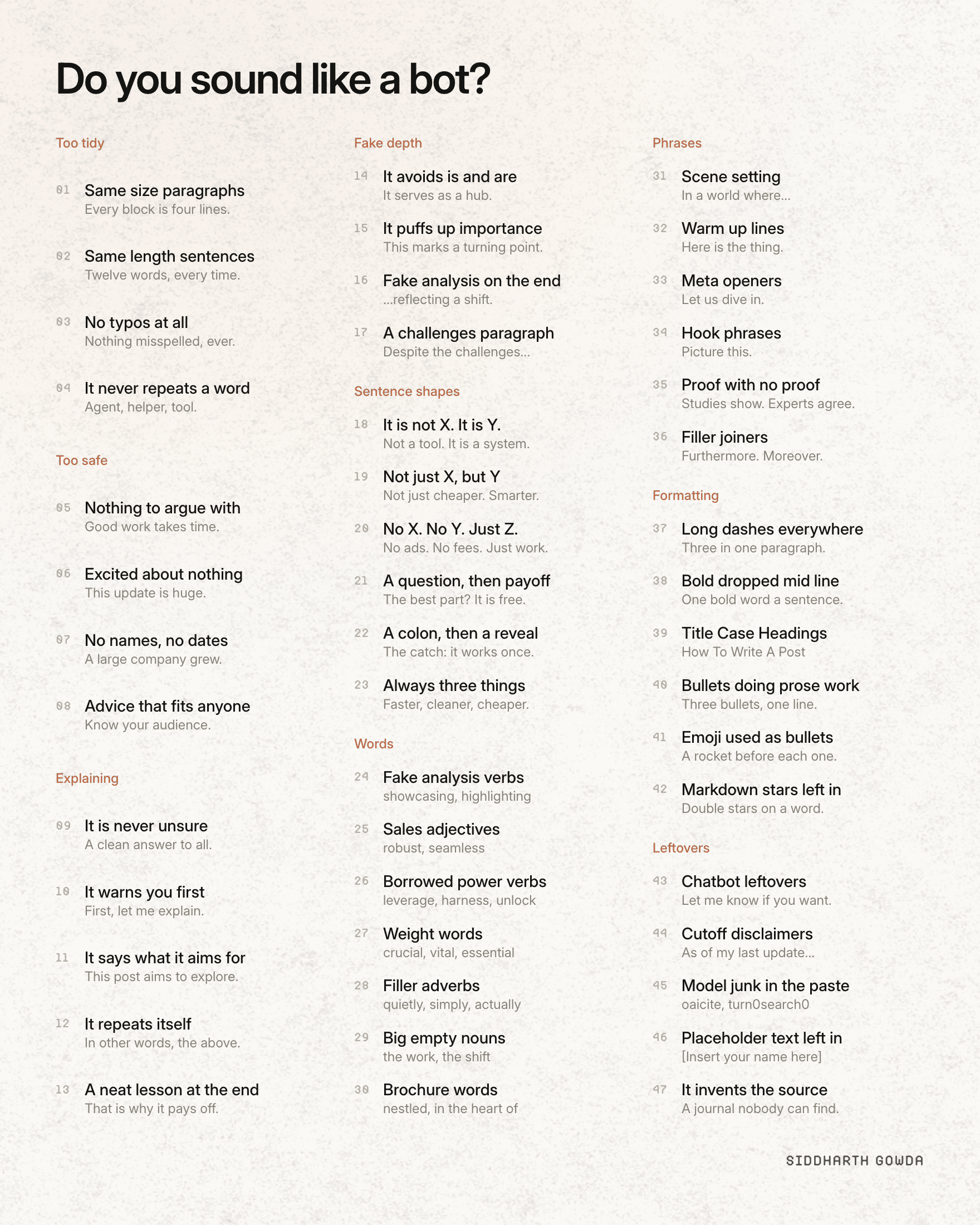
I’m 100% convinced we all sound AI generated.
The other day I read something I wrote, and then I later realized it sounded like ai, even though I wrote every word by hand.
ai learned to write by reading everything we’ve ever written.
Now we’re reading so much AI that we’re starting to write like it (even tho it came from us)
We’re at the point where even clean writing without using AI can look sus, and maybe the only way to prove that your human is to leave a mistake in.
 Siddharth
Google released their Wispr Flow competitor. It’s called Eloquent.
Just tried this, it was pretty cool.
→ It’s completely free → It runs locally on your computer entirely → You just need something with 16GB of RAM → It runs the 12B Gemma model → Full voice dictation → It’s only for developers right now
Setting it up is really annoying because it’s for developers. But the transcription quality is good and it’s pretty fast.
 Siddharth
You could have everything you ever wanted, but still not want it. And I think a lot of brands and companies forget this.
So I learned about this concept called the experience machine in my undergrad. It’s pretty interesting. It’s by this guy, Robert Nozick. He’s some Harvard philosopher. The thought experiment goes that you have some machine that you could plug any human being into, and it’ll generate any experience for them, like The Matrix, basically. So you could have all your desires fulfilled. But you wouldn’t want that, right?
The interesting thing here is that it goes against human nature. You’d think that we would want all of our desires, and it doesn’t matter how we get it as long as we get it. But brands, they kind of forget this part, which is that there’s one thing that’s more important than anything in life, which is authenticity.
#philosophy #psychology #marketing
 Siddharth
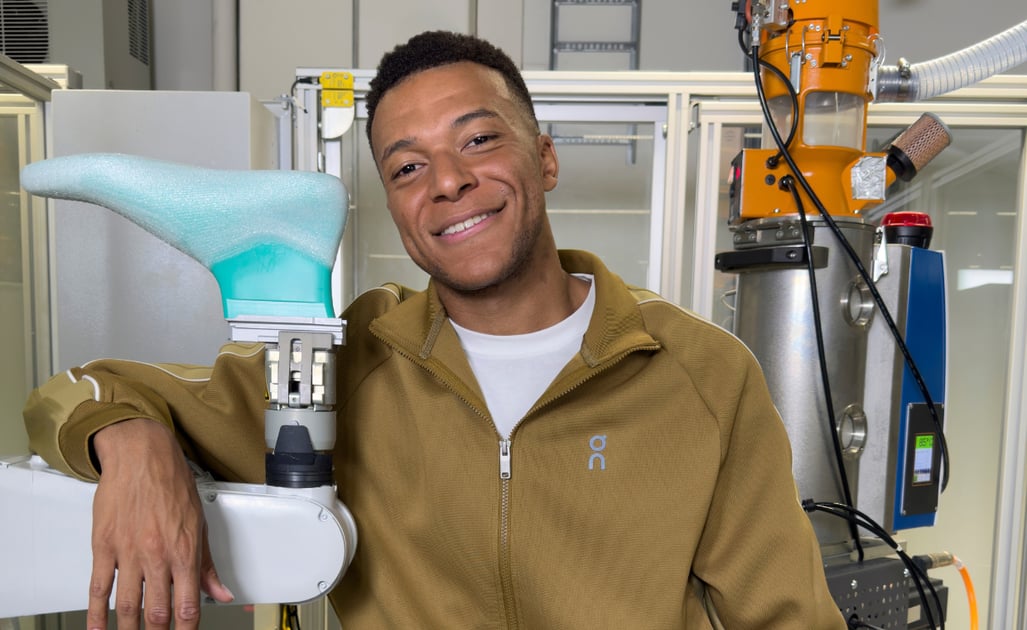
Nike’s stock is down over 40% this year. They have really fumbled the ball on legendary athletes and now the same thing with Mbappe.
2013 - Steph Curry: Nike lowballed him → Under Armour. He built Curry Brand and still owns it. 2018 - Roger Federer: 24 years with Nike → Uniqlo, $300M over 10 years + On equity → billionaire 2019 - Allyson Felix: Nike offered her 70% less while she was pregnant → Athleta, their first athlete. 2021 - Simone Biles: the most decorated gymnast ever → Athleta. 2026 - Kylian Mbappe: 20 years in Nike boots → On, with equity and his own boot line.
 Siddharth
everyone needs to know about self-determination theory
It says you need three things to feel happy in life.
You need to feel like you’re in control of your life.
The best example is video games. They’re so addictive because they’re structured. They give you a clear goal and a clear way to reach it, at least more than real life does.
You need relationships. Obvious, but I don’t think people get how deep this goes.
We’re social creatures. We spent thousands of years hunting together and living together. That’s not just going to go away overnight.
People need to feel like they can actually get things done.
And it’s more than solving one problem for them. If you help someone build the skill to solve the next problem on their own, that’s a completely different level of value you’re giving them.
 Siddharth
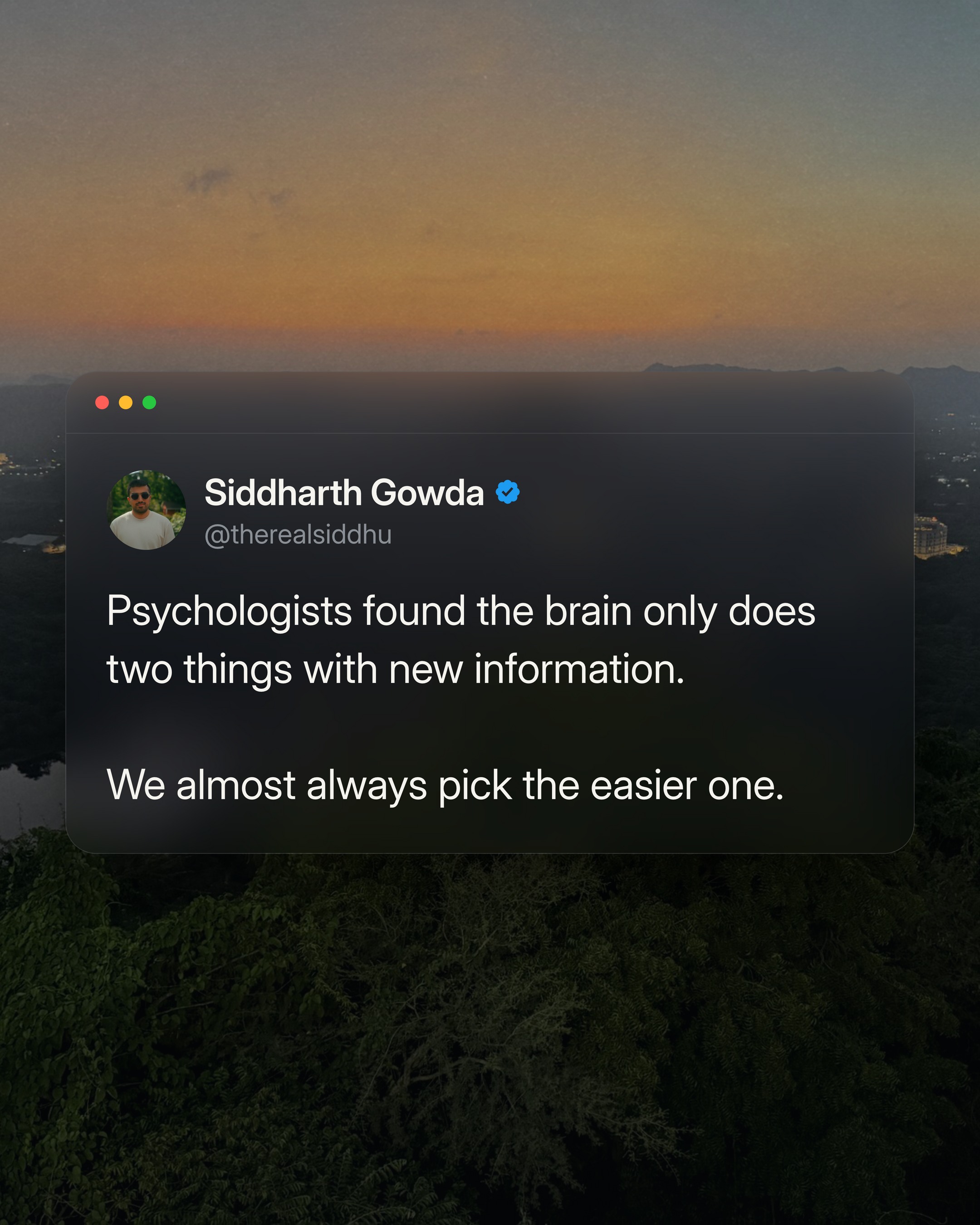
Psychologists found the brain only does two things with new information.
We almost always pick the easier one.
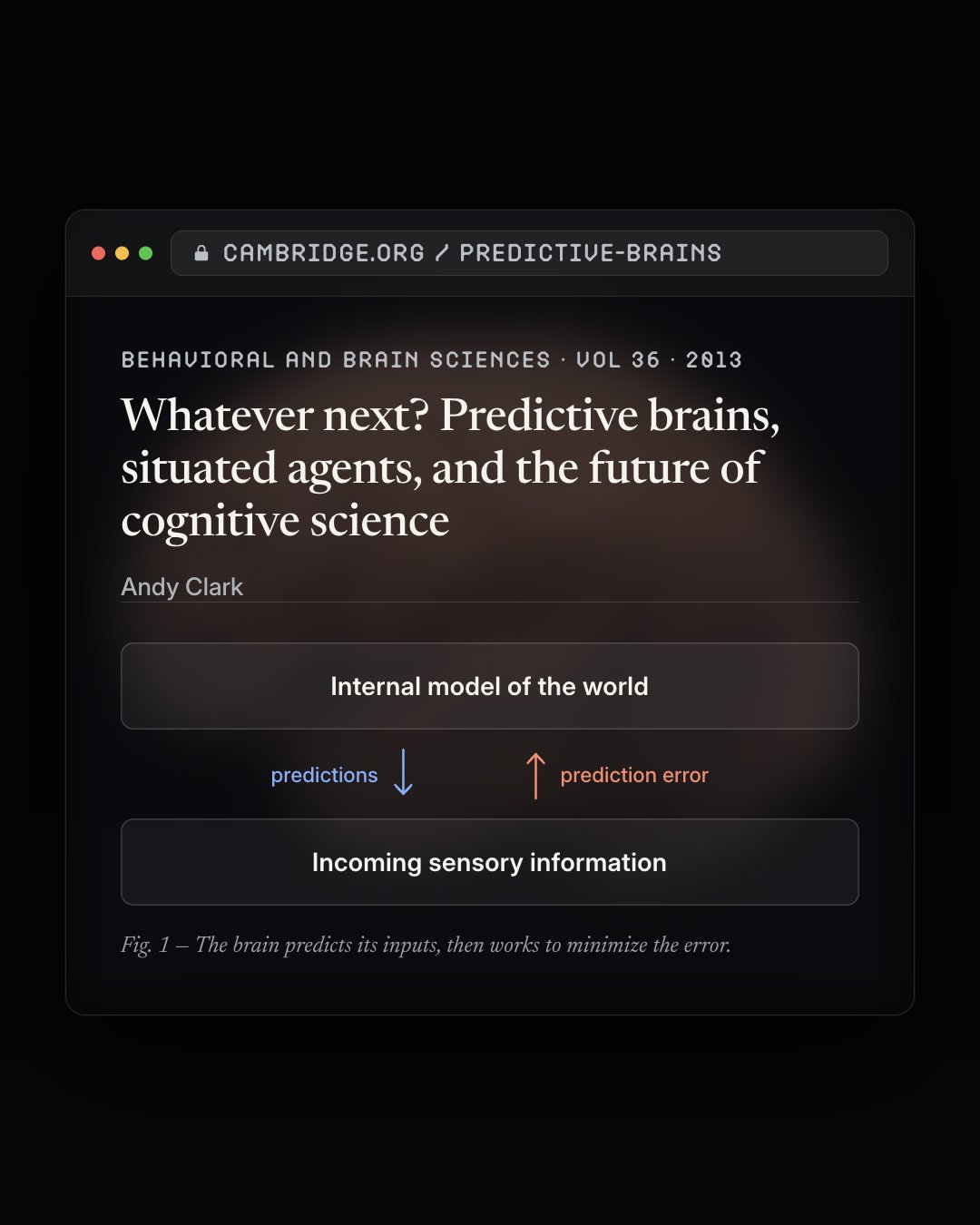
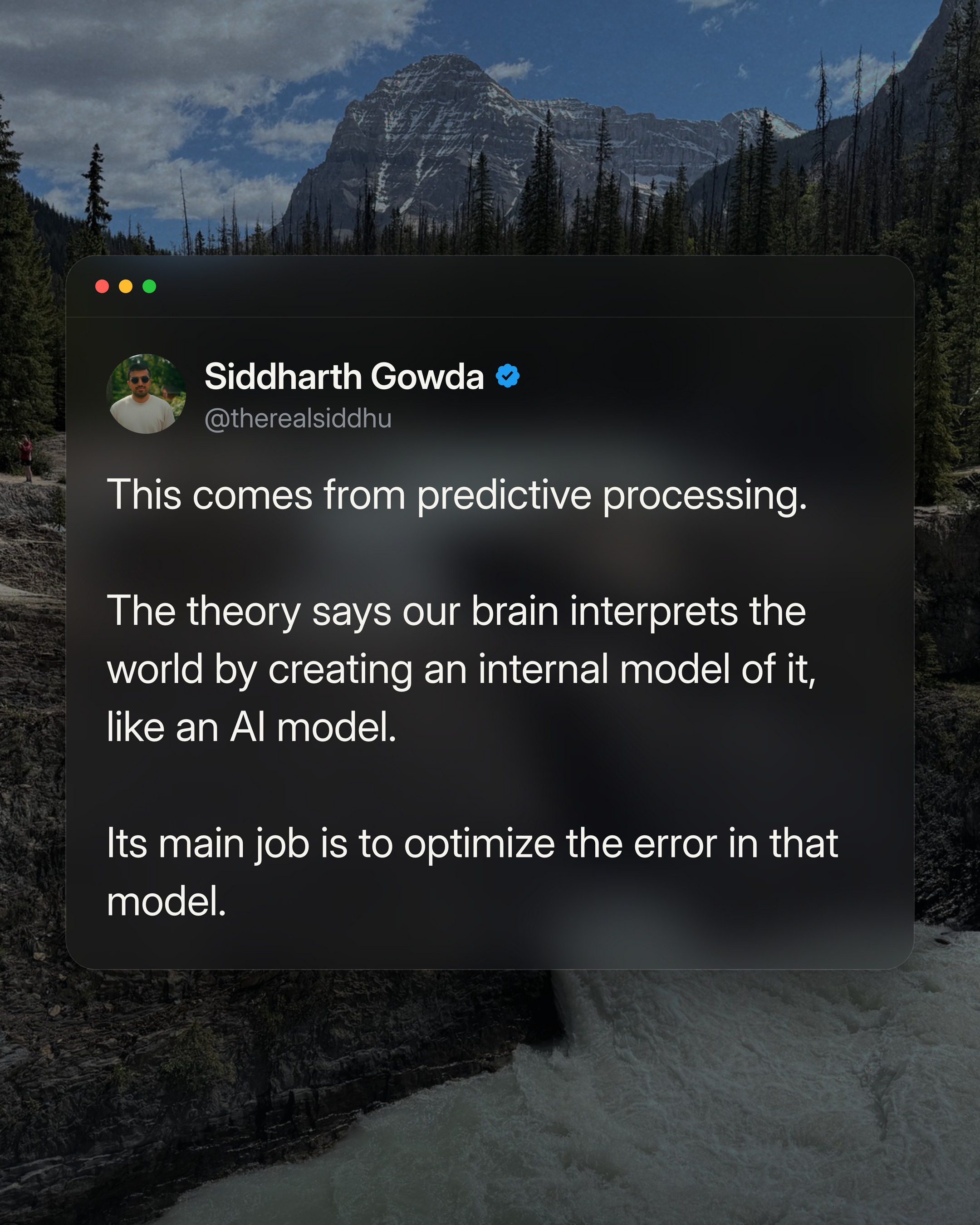
This comes from predictive processing. The theory says our brain interprets the world by creating an internal model of it, like an AI model. Its main job is to optimize the error in that model.
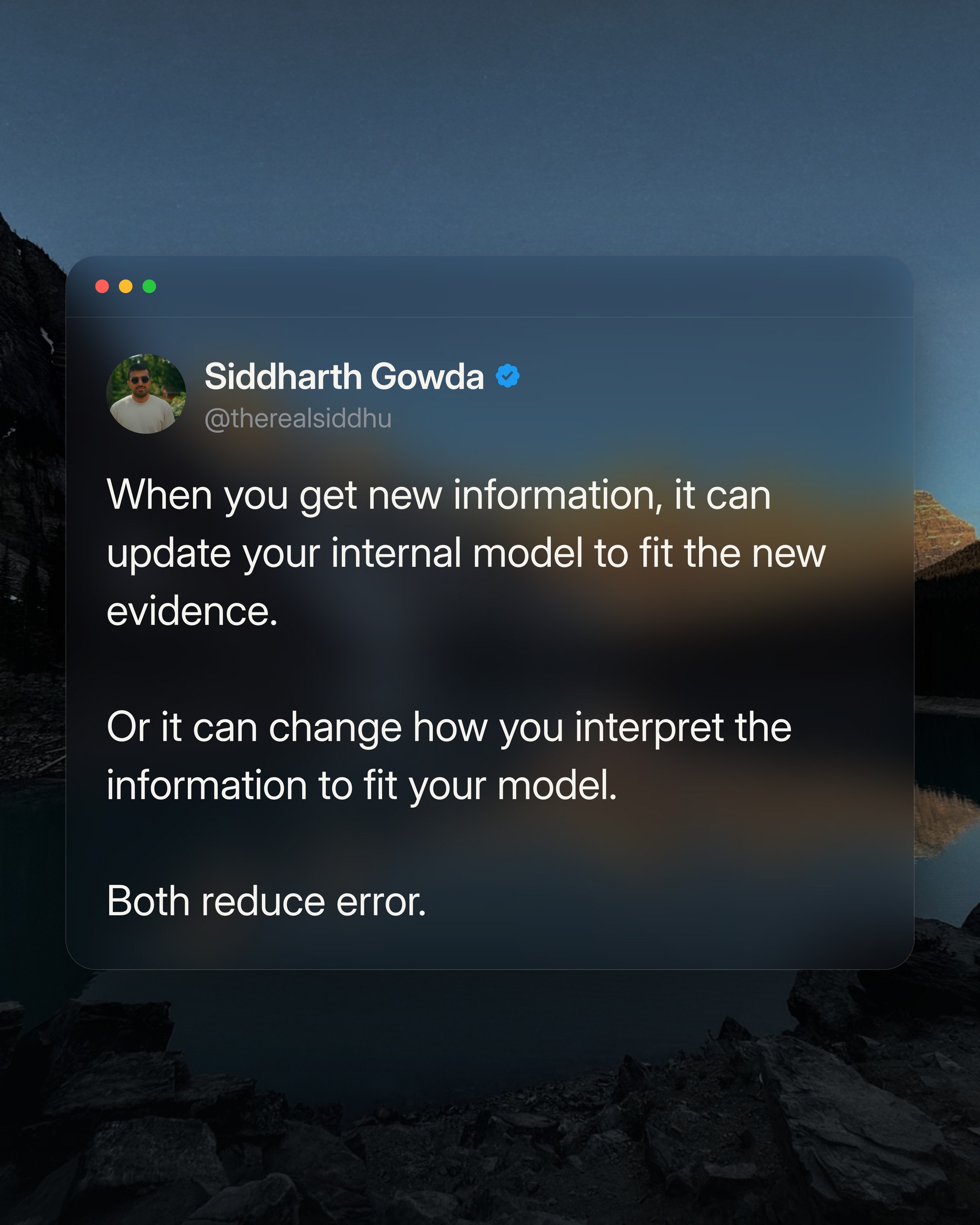
When you get new information, it can update your internal model to fit the new evidence. Or it can change how you interpret the information to fit your model. Both reduce error.
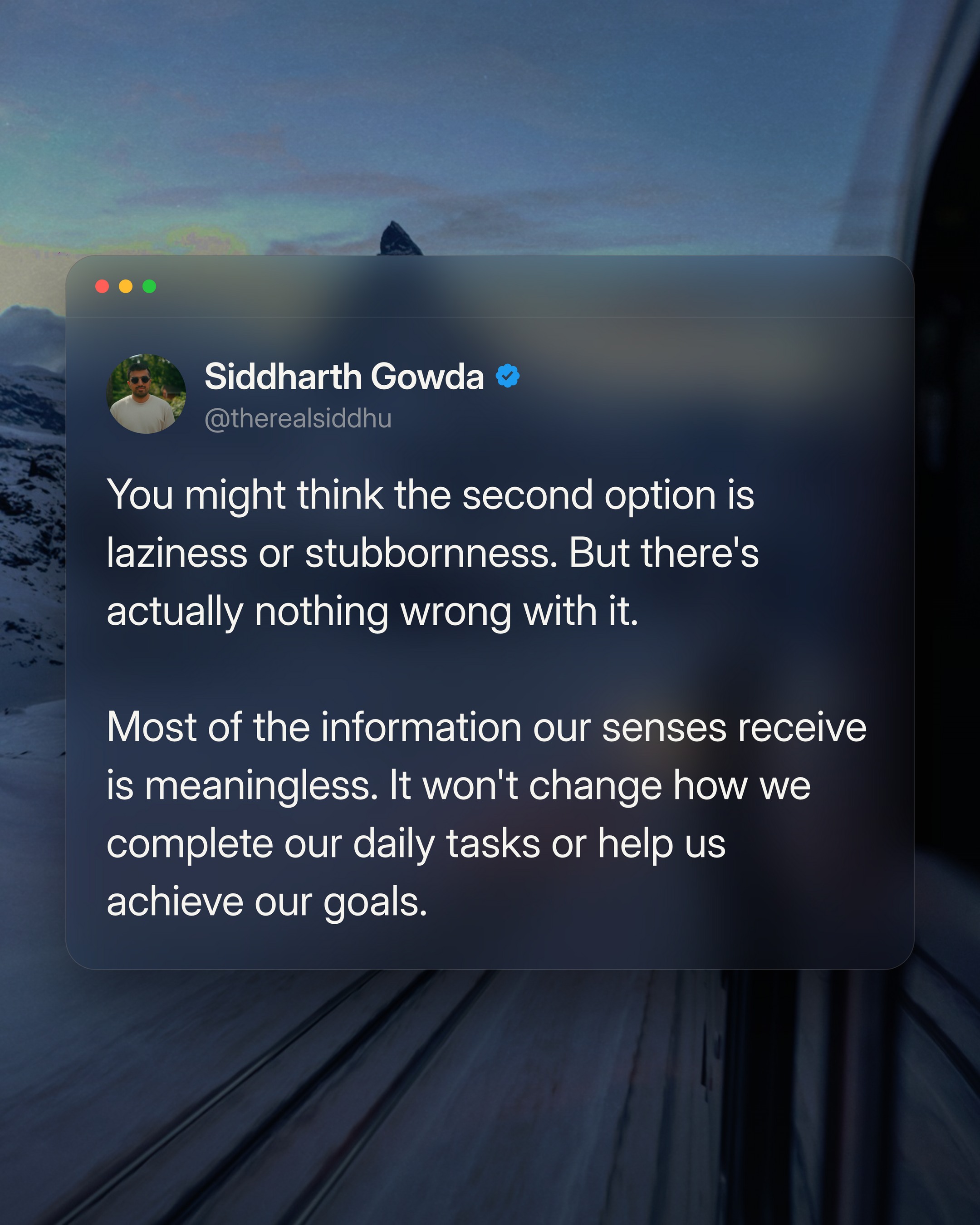
You might think the second option is laziness or stubbornness. But there’s actually nothing wrong with it. Most of the information our senses receive is meaningless. It won’t change how we complete our daily tasks or help us achieve our goals.
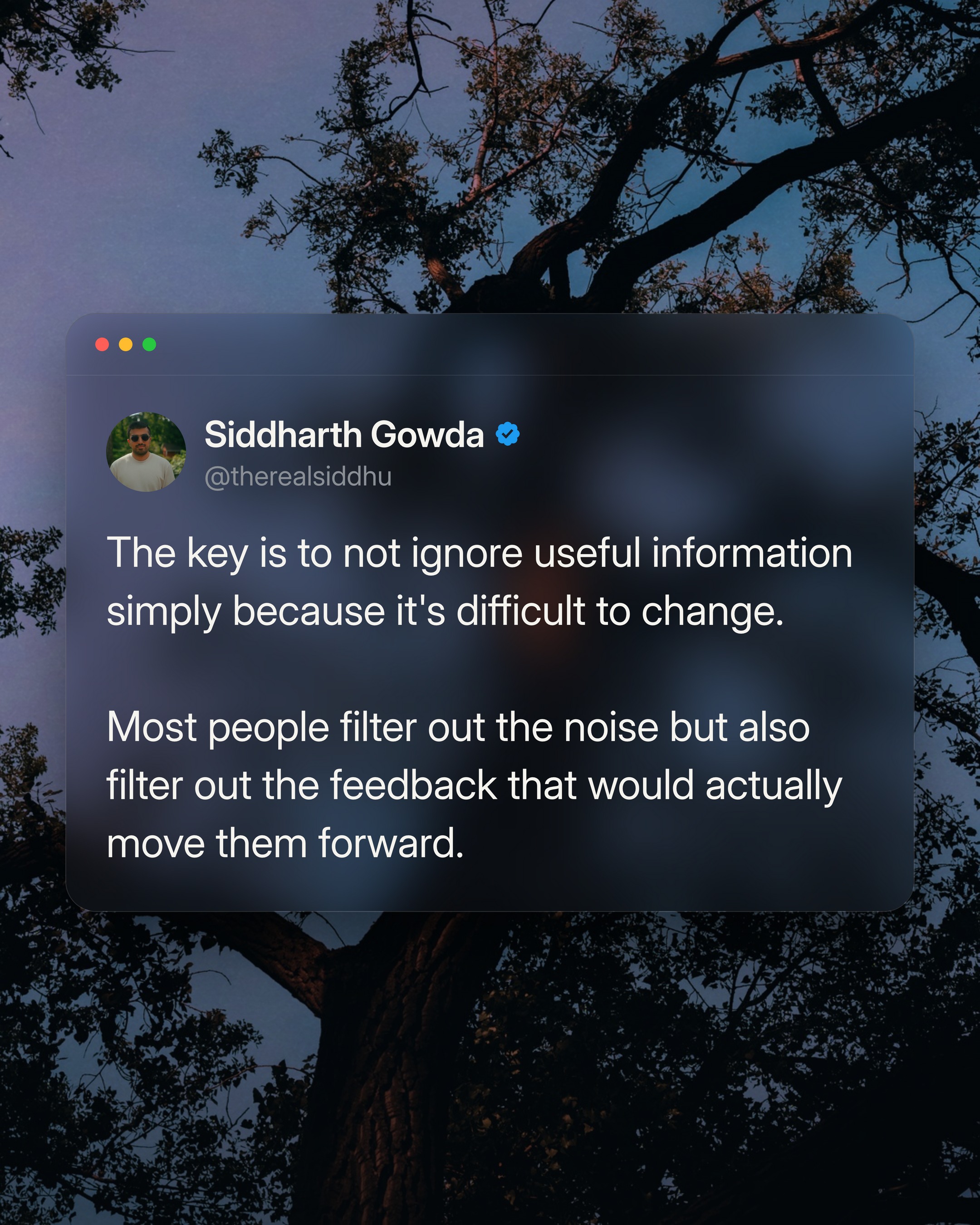
The key is to not ignore useful information simply because it’s difficult to change. Most people filter out the noise but also filter out the feedback that would actually move them forward.
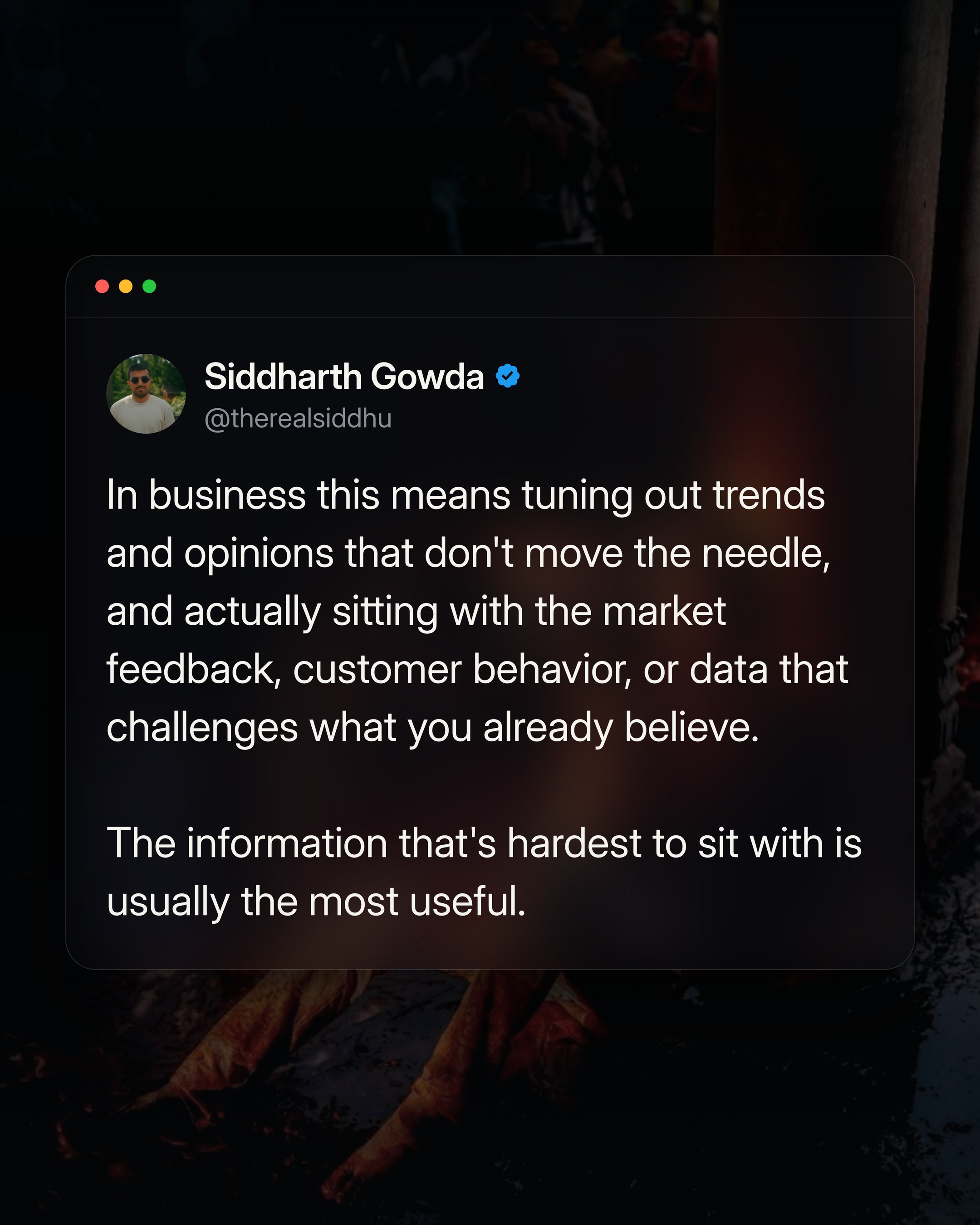
In business this means tuning out trends and opinions that don’t move the needle, and actually sitting with the market feedback, customer behavior, or data that challenges what you already believe.
The information that’s hardest to sit with is usually the most useful.
 Siddharth
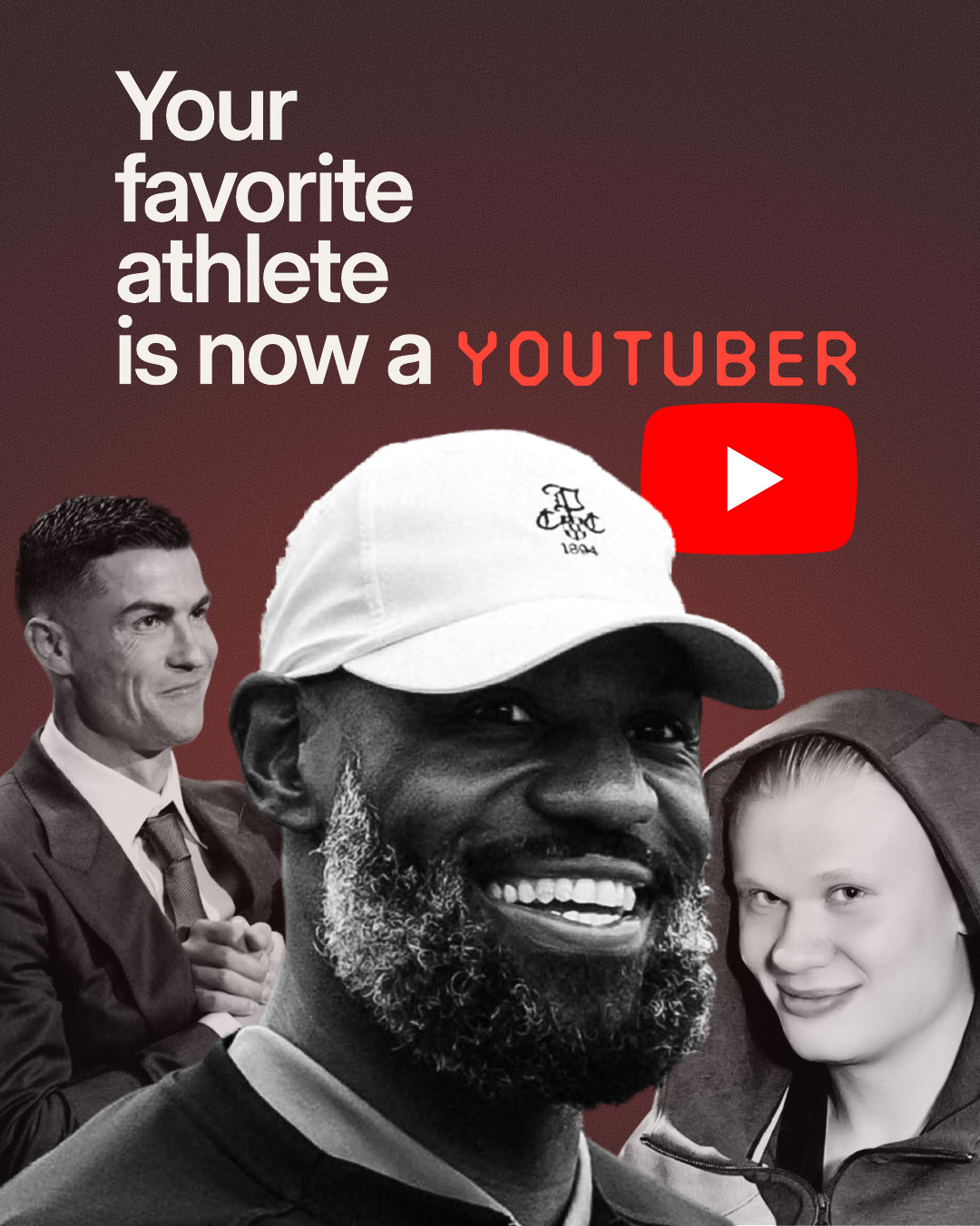
it feels like every single athlete is now a youtuber
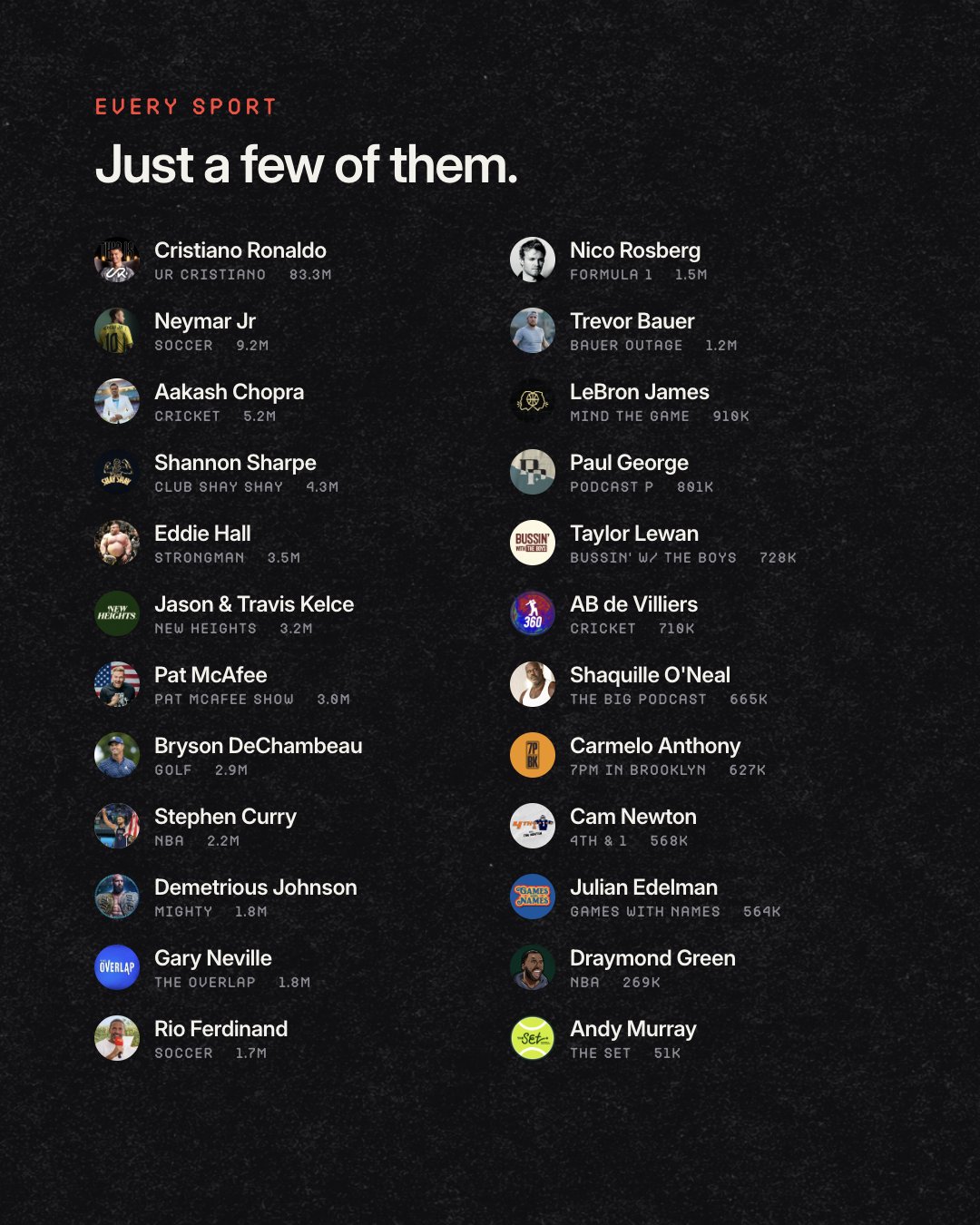
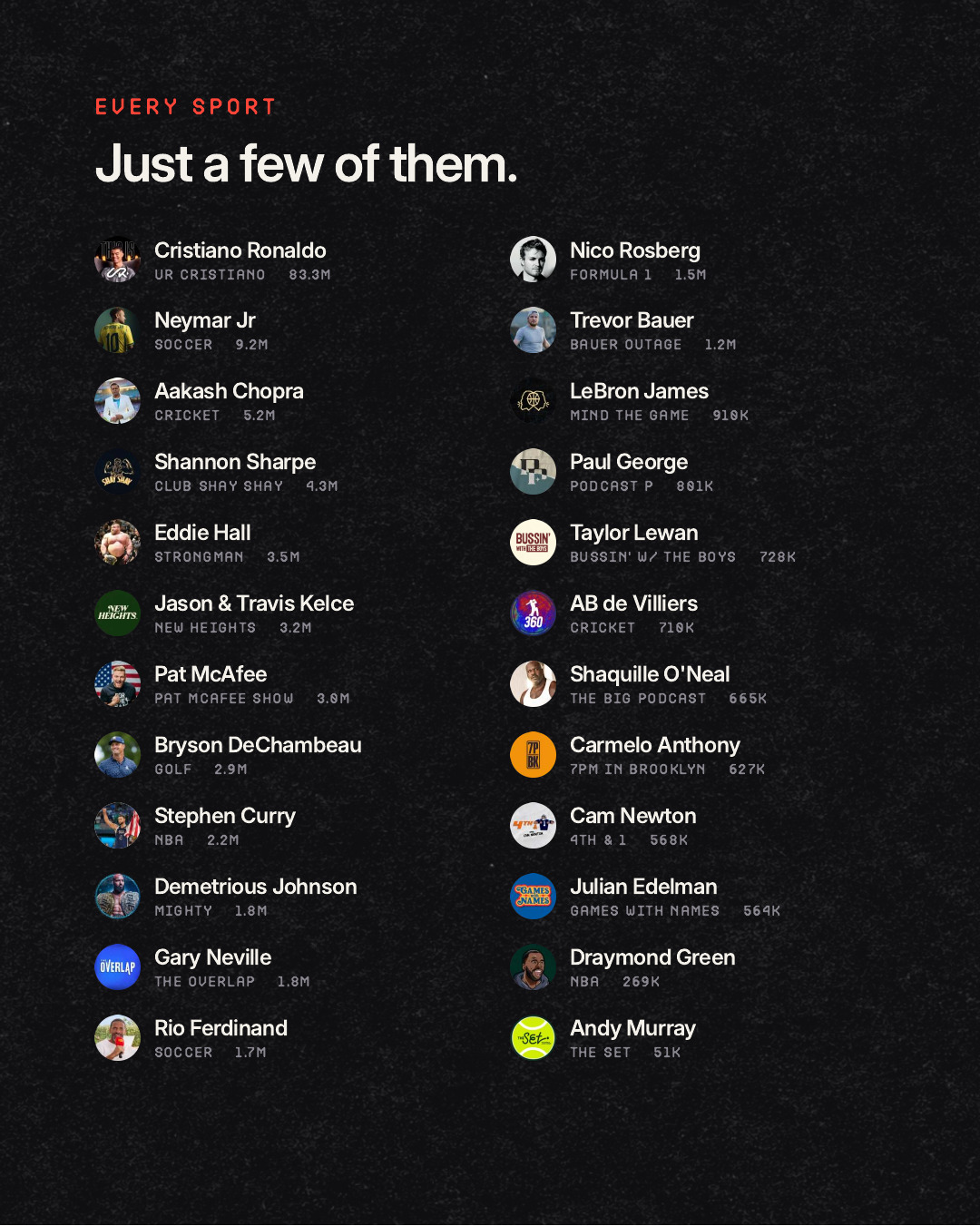
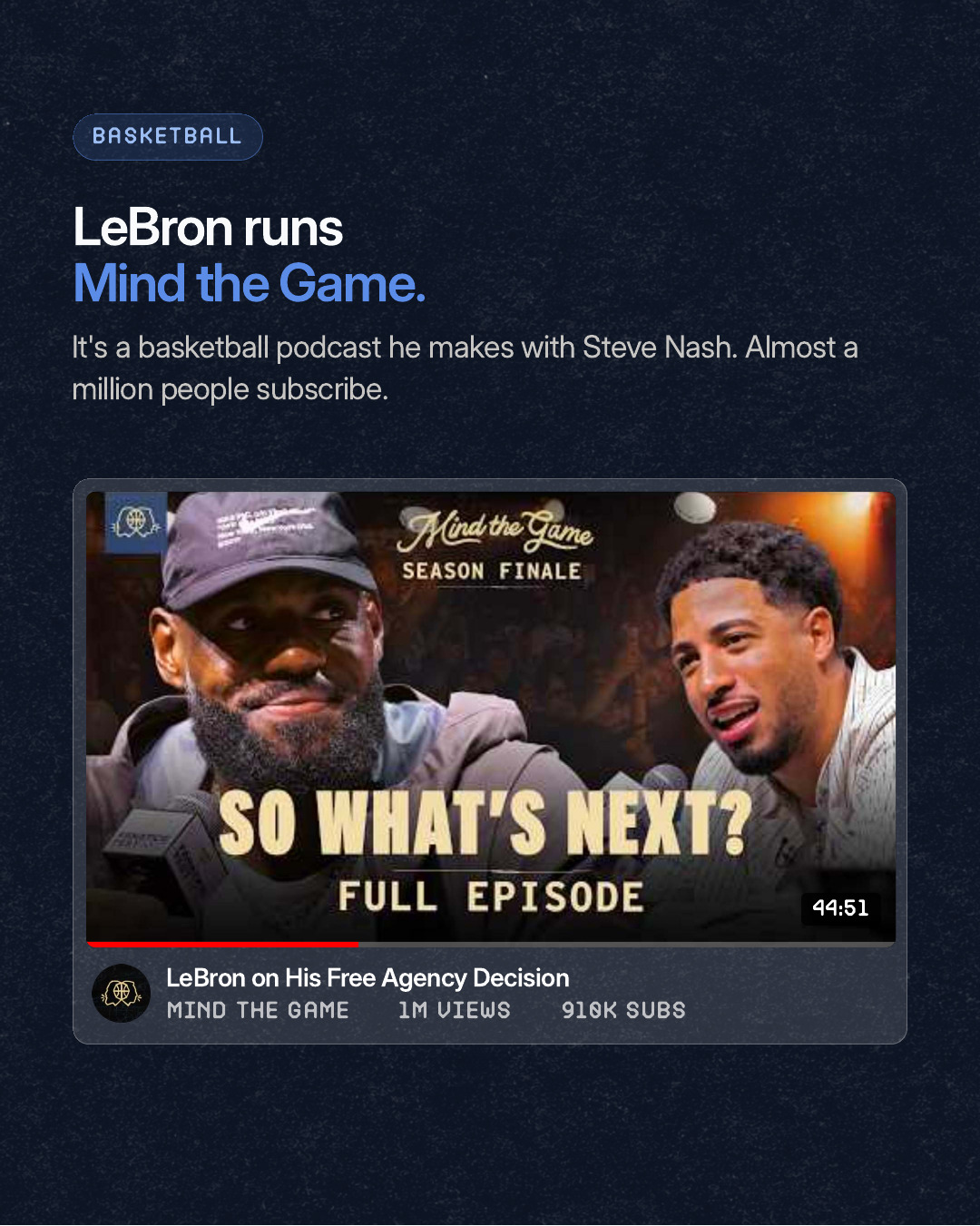
Cristiano Ronaldo → 83.3M subs Neymar Jr → 9.2M subs Aakash Chopra → 5.2M subs Shannon Sharpe → 4.3M subs Eddie Hall → 3.5M subs Jason & Travis Kelce → 3.2M subs Pat McAfee → 3.0M subs Bryson DeChambeau → 2.9M subs Stephen Curry → 2.2M subs Demetrious Johnson → 1.8M subs Gary Neville → 1.8M subs Rio Ferdinand → 1.7M subs Nico Rosberg → 1.5M subs Trevor Bauer → 1.2M subs LeBron James → 910K subs Paul George → 801K subs Taylor Lewan → 728K subs AB de Villiers → 710K subs Shaquille O’Neal → 665K subs Carmelo Anthony → 627K subs Cam Newton → 568K subs Julian Edelman → 564K subs Draymond Green → 269K subs Andy Murray → 51K subs
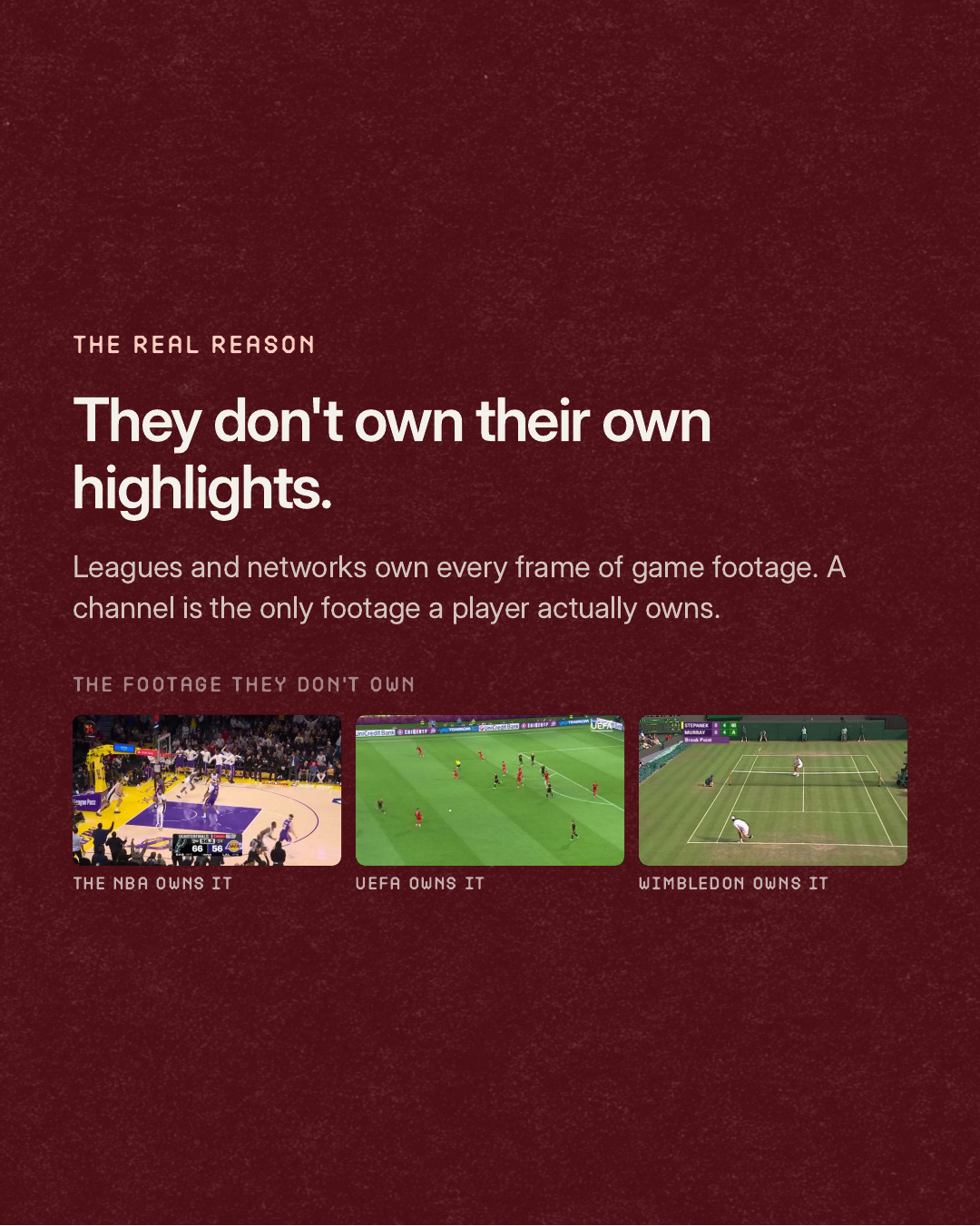
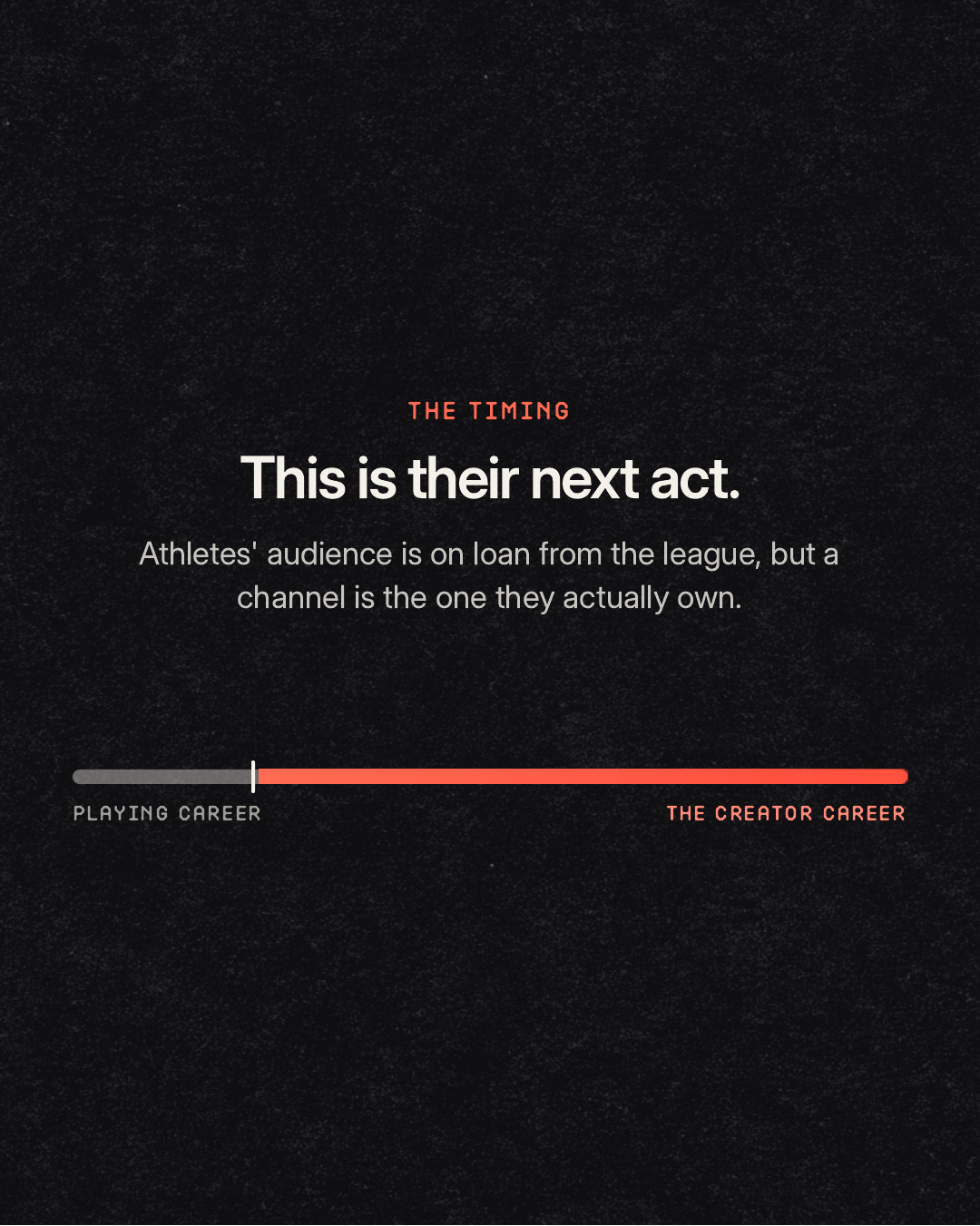
The leagues own the highlights. All an athlete really owns is the mindshare, the fact that people actually watched them and remember their face.
A channel is one of the first tangible things on the internet that’s actually theirs. Somewhere they own the content, own the distribution, can monetize it, build a real career, and promote all their other investments and products off of it.
You can already see who’s taking it seriously. The Kelce brothers, Draymond Green.
And what they build usually outlasts the playing days. Look at Shaq, Pat McAfee, Shannon Sharpe.
Ask a lot of the younger generation who they are and they’ll say the people they see on YouTube. They know them for the talking instead of the highlights because they’ve spent way more time listening to them than they ever spent watching them play.
So of course they all have a YouTube channel now.
 Siddharth
Something I’ve been thinking about. Every brand owns one word in your head.
Volvo → safety FedEx → overnight Google → search Red Bull → energy Rolex → status Ferrari → speed Harley → freedom Disney → magic Amazon → everything Tesla → electric Uber → a ride Duracell → long-lasting
It’s hard being stuck in no man’s land, and that’s exactly what happened to Coke.
Regular Coke has the classic red can, full sugar, the one we all grew up with. Diet Coke and Coke Zero were the complete opposite with no sugar and zero calories.
But then Coke released “Coke Life”. This was a version of Coke with a little bit of sugar, a little stevia, a green can instead of their red one. It sat right in the middle and so it did not have a clean slot in people’s minds. It wasn’t the real Coke and it wasn’t zero either.
The middle appeals to no one.
 Siddharth
Yesterday, I made a really common psychological mistake, and it’s so frustrating because I studied this exact same thing multiple times in undergrad. But after watching this video, you better not make that mistake.
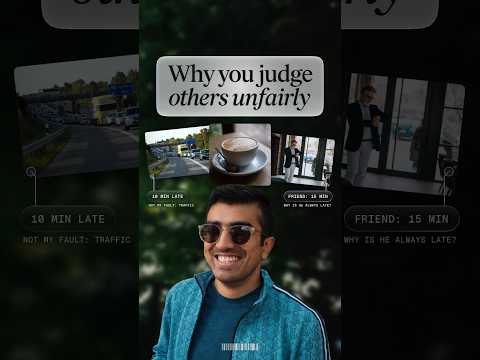
So I was gonna meet a friend for coffee, but traffic was so bad that I ended up getting there 10 minutes late. I was a bit frustrated at myself, but I was also like, “It’s fine. It wasn’t really my fault.”
Then my friend comes 15 minutes after me, and my first thought is, “Why is he always late?”
This is called the fundamental attribution error. The idea is that when you make a mistake, you blame your circumstances, but when someone else does, you blame their character.
 Siddharth
if you make content, you’re up against 200,000 years of survival instincts.
I studied psychology in undergrad, and this is why social media algorithms love negative content and why you do too.
Imagine you’re a prehistoric human. You see a sunset, do you stop to watch it? If you do, you probably got killed because you missed the tiger behind you. But if you miss something good … you’re fine, miss something bad and you’re dead.
That instinct in us humans never left because it just moved to your social feed.
 Siddharth
If someone can’t tell what your content is about in one second, their brain already moved on.
I studied Buddhism and psychology in college, and how your eyes actually work explains it. Your eyes don’t really see objects. They just collect raw data (brightness, motion, orientation) and your brain guesses the rest from what it already expects.
And the brain only has a limited amount of computational energy. So you can have all the fancy graphics in the world, but if the viewer can’t instantly see the primary focus, you’ve wasted your time.
Same rule for ads, thumbnails, landing pages, and reels. Make the one thing you want them to see impossible to miss.
 Siddharth
The colors in this video aren’t real. Neither is most of what you see.
Your eyes don’t send your brain a picture. They send a little bit of data and your brain fills in the rest from everything you’ve already seen. Past experiences, your culture, whatever’s on your feed.
So what you see is really just your brain’s best guess at the world (they actually call it controlled hallucination).
Your expectations basically become your reality.
Kind of unsettling but powerful to understand.
 Siddharth
Everyone keeps saying that with AI you can just be way more ambitious now and go 0 to 100 instantly, and to some extent that’s true. Everything is one prompt away, so the activation energy to get something off the ground is basically nothing now.
But that was never really the hardest part. The energy to actually finish it is still just as hard as it always was. It’s always the finishing touches of building a house that take the longest, and getting something to actually be good hasn’t gotten any easier now that the bar for what is good has raised so much.
Anyway check out this episode with Anish Acharya on @lennysan, it’s worth a listen.
 Siddharth
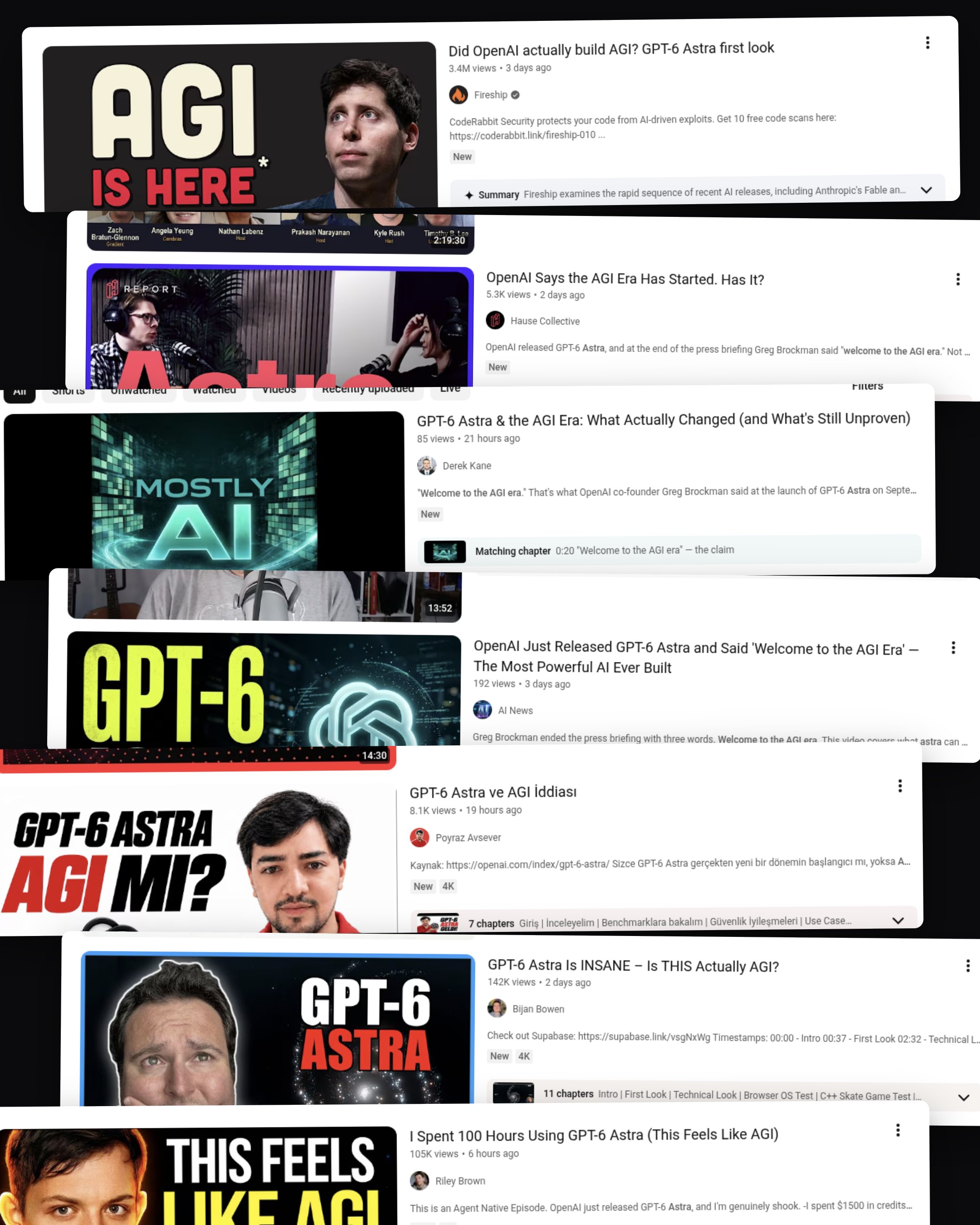
AGI propaganda has arrived.
Everyone is parroting the same thing all over social.
Even if a creator genuinely feels this way and they are showing something interesting, it still makes it feel like they are part of some undisclosed ad campaign.
But should we be mad at this or should we just accept it?
If you are running a camera brand and there’s an embargo on the product, when the product releases people will post about it. We often see a bunch of different camera videos on YouTube at the same time, and they all have a lot of the same framing. It’s the same with the new iPhone or any release of a tech product.
Is AI just another version of that?
I think the reason this feels a little off in the AI world is because of how much hype gets generated around every release nearly every week. Astra is truly a one of a kind model, and maybe it does feel like AGI in some regards.
However, this particular round of content does feel like, “oh here we go again,” because of the way it has been pushed in previous iterations. Even if this is truly a step level increase, it hilariously feels like a coordinated propaganda machine and if it really was AGI, then Astra should have seen it coming.
 Siddharth
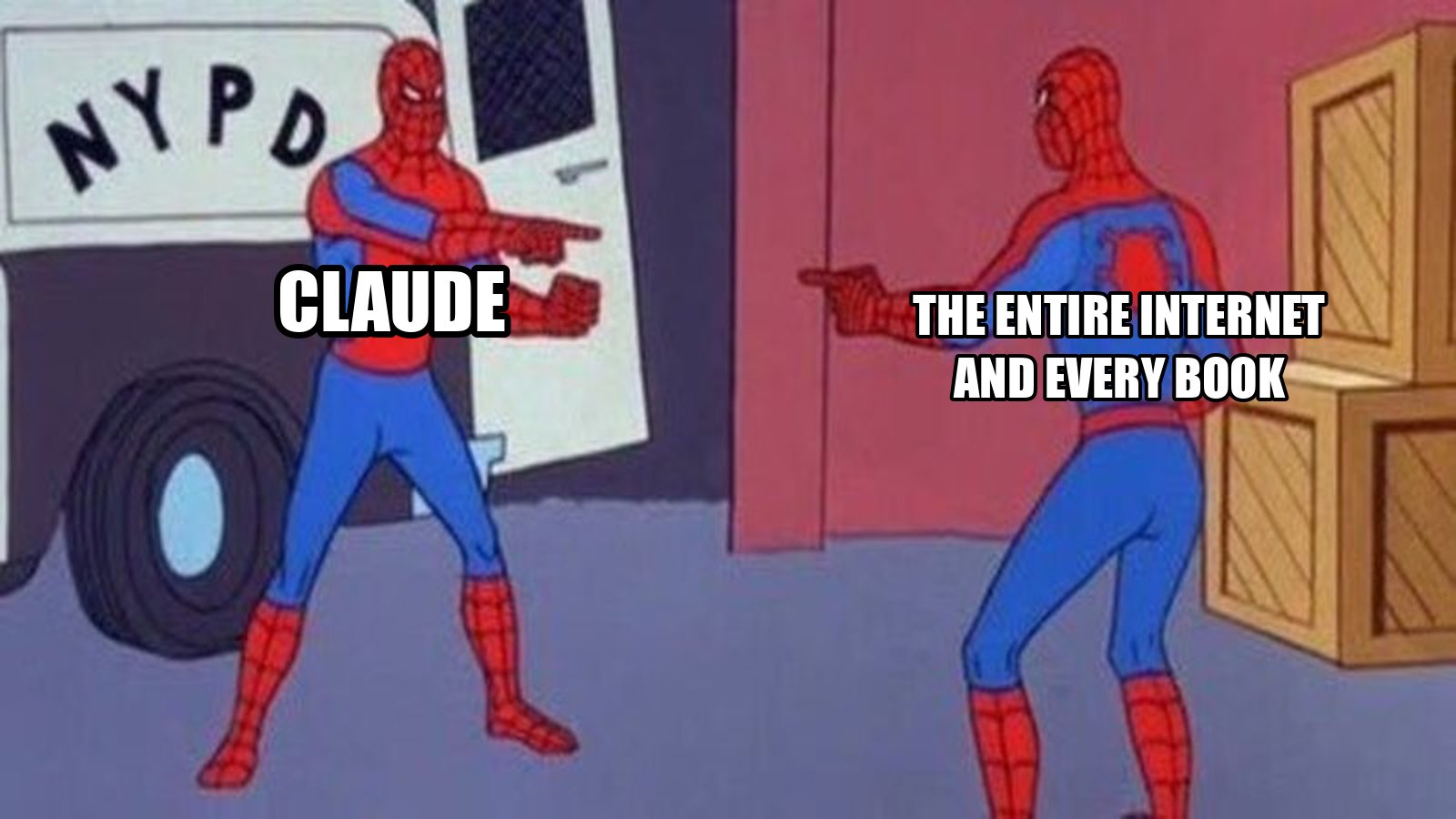
Grok 4.5 is trained on Cursor. Cursor’s Composer is built on Kimi. Kimi introduces itself as Claude.
Everything is a wrapper @elonmusk


 Siddharth
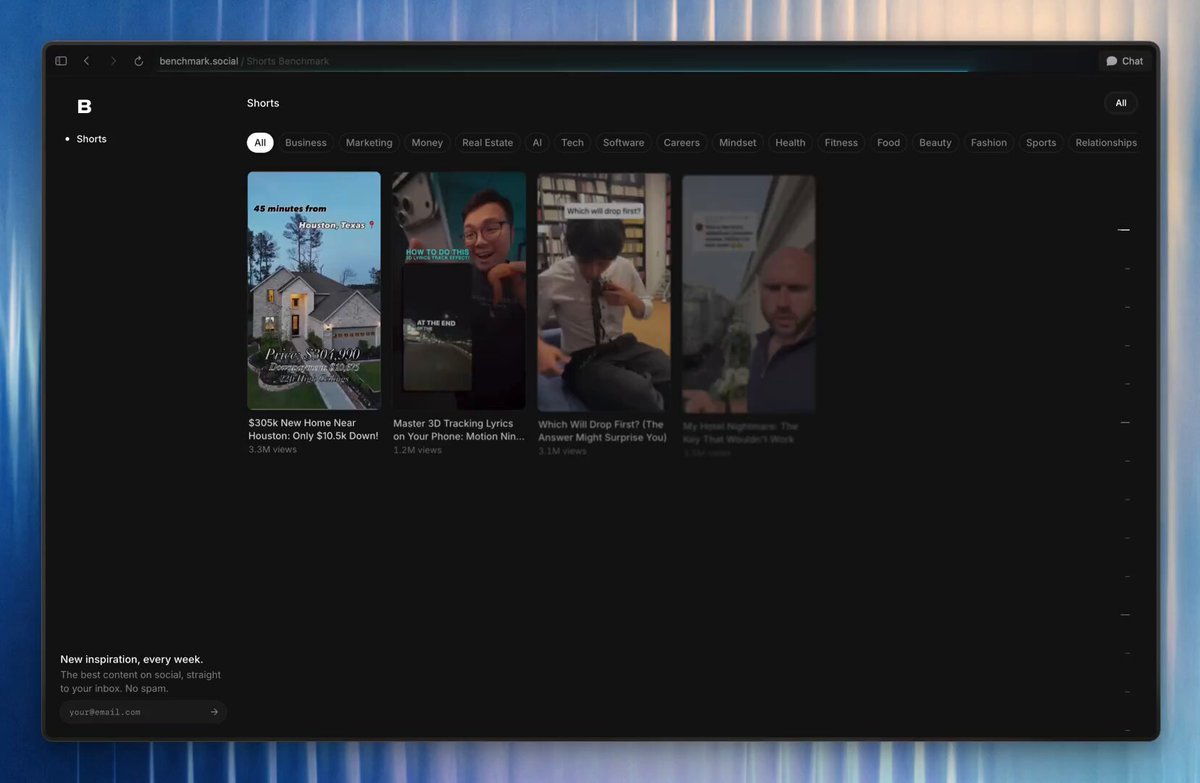
Introducing http://benchmark.social, a free resource for content inspiration.
My brother wanted to start back his tennis youtube channel, but it had been a while since he posted (especially short form) and getting going again wasn’t easy.
Analysis paralysis is definitely a real thing, especially when there’s just so much information in the content and creator space. Sometimes the best thing to help you get started is to have a library of great references you can pull from.
So for anyone else that wants to use it, here’s http://benchmark.social as a free resource to keep coming back to for high-performing content.
I’m working on adding content from other platforms and formats. If you have any ideas or other things you want to see on there, let me know.
Sign up for the email in the bottom left corner and I’ll send you an update every week with new things that are added (no spam, dw)
 Siddharth
ESPN kept millions watching every day for decades. The ideas behind their formats are the same ones running everything that works online now, and anyone making content can use them.
Siddharth What Google's new research paper reveals about how YouTube recommendations are evolving, and what it means for creators.
Siddharth What happens when the algorithm keeps rewarding you while you're building the wrong thing. Lessons from 200+ viral videos that went nowhere.