Predictive processing
 Siddharth
Psychologists found the brain only does two things with new information.
We almost always pick the easier one.
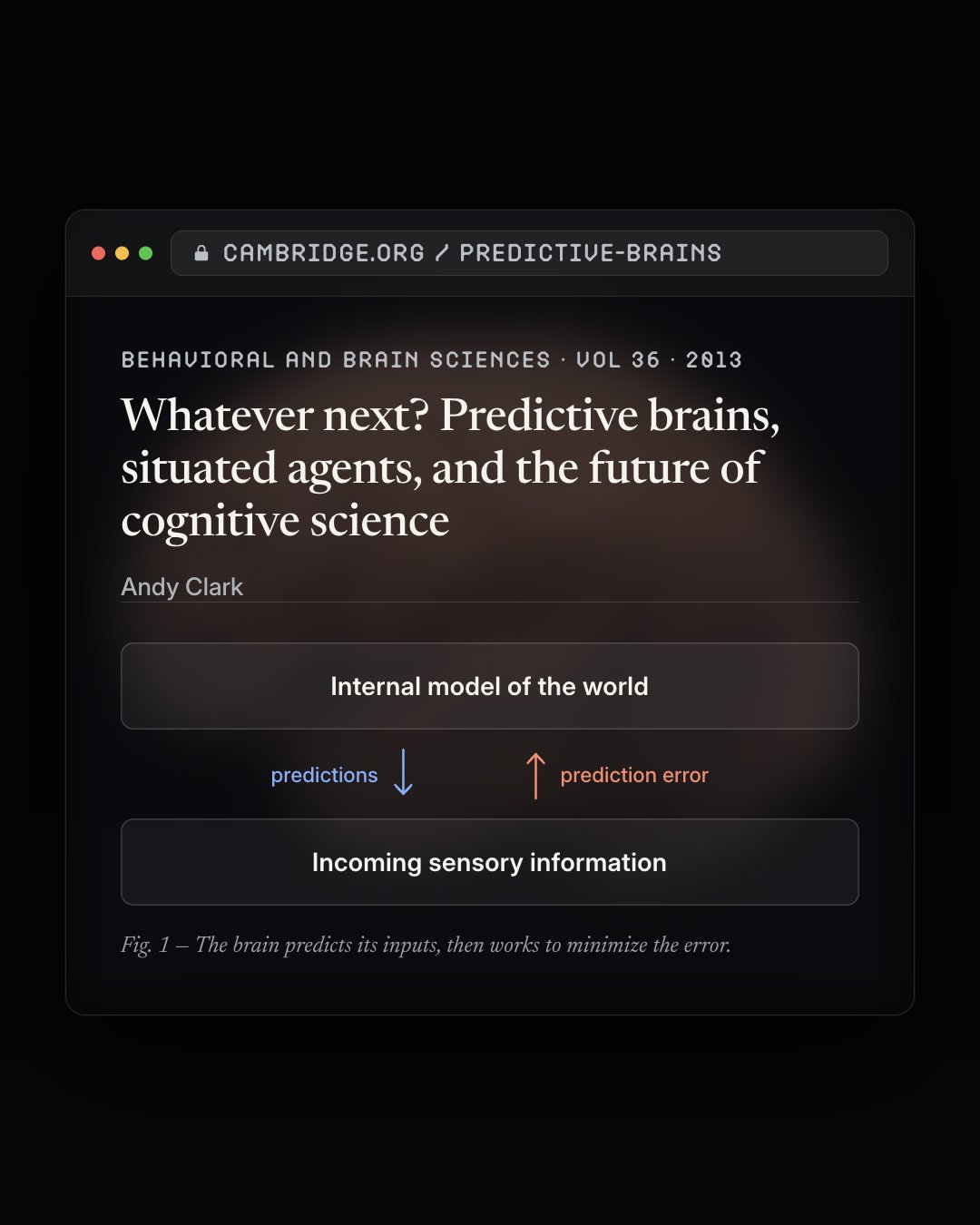
This comes from predictive processing. The theory says our brain interprets the world by creating an internal model of it, like an AI model. Its main job is to optimize the error in that model.
When you get new information, it can update your internal model to fit the new evidence. Or it can change how you interpret the information to fit your model. Both reduce error.
You might think the second option is laziness or stubbornness. But there’s actually nothing wrong with it. Most of the information our senses receive is meaningless. It won’t change how we complete our daily tasks or help us achieve our goals.
The key is to not ignore useful information simply because it’s difficult to change. Most people filter out the noise but also filter out the feedback that would actually move them forward.
In business this means tuning out trends and opinions that don’t move the needle, and actually sitting with the market feedback, customer behavior, or data that challenges what you already believe.
The information that’s hardest to sit with is usually the most useful.